Multiple myeloma (MM) is characterized by monoclonal multiplication and accumulation of malignant plasma cells in the bone marrow, accounting for approximately 10% of all hematologic neoplasms. It remains incurable, and most patients have an overall survival following diagnosis of up to 5 years.
Although testing of new chemotherapy agents has shown good outcomes for duration of disease remission,
Because of different mechanisms that may be involved in the development of drug resistance in MM, the treatment of patients with refractory disease is challenging and needs to be continuously studied.
Treatment options for primary or refractory MM generally include different combinations of drugs with different mechanisms of action, such as corticosteroids, immunomodulatory drugs, and monoclonal antibodies, as well as autologous stem cell transplantation.
CAR-T cells are the patient’s own T cells that were genetically modified to obtain enhanced and specific cytotoxic activity.
The is a systematic review based on the Preferred Reporting Items for Systematic Reviews and Meta-Analyses (PRISMA) criteria.
The PubMed database (MEDLINE) was used to search for the combination of terms “multiple myeloma” [MeSH Terms] OR “refractory multiple myeloma” [Title/Abstract] AND “CAR T-cell” [Title/Abstract]. The terms should appear in at least one of three search fields, i.e., title, keywords, or abstract. No other filters were added. The search strategy was used in October 2020. All identified records were exported and contained at least information about the authors, year and journal of publication, title, and abstract.
Potentially eligible articles were evaluated using Microsoft Excel®. The articles were initially selected by title and abstract screening. The inclusion criteria were as follows: being an original article based on a randomized clinical trial; investigating primary treatment with CAR-T cells; having refractory MM as an outcome or exposure; and being written in English. The articles selected for full-text screening were located and exported in PDF format,
and the evaluation followed the same criteria previously established. Finally, the selected studies had their references analyzed to identify possible new articles as well as gray literature.
The entire selection process was carried out by the two authors (SS and VS) independently. Articles selected by both authors were included, and those not selected by any author were excluded. The articles included by only one of the authors were analyzed in a meeting, and the judgment for including or excluding them, according to the eligibility criteria, was discussed.
Data were extracted using Microsoft Excel® to identify the studies, including main author, year of publication, place where the study was developed, study phase, CAR-T cell target, number of patients, and others. Data extraction was performed by one author (SS) and analyzed by the other (VS) independently.
A risk-of-bias assessment of included studies improves the reliability of the results of a systematic review
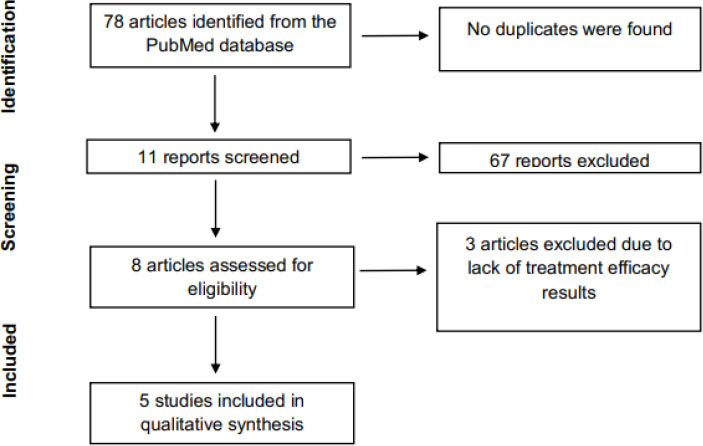
Seventy-eight articles were identified as potentially eligible. An initial evaluation following the established criteria resulted in 11 articles, and eight were selected for full-text screening. Three articles were then excluded because their results did not mention whether the treatment used was effective. Thus, five articles were included in qualitative analysis, as shown in the flow diagram below (
The five included articles were then analyzed. An overview of reviewed studies is shown in
The selected articles were published by research teams in the United States (2 articles) and China (3 articles) between 2018 (2 articles) and 2019 (3 articles), having BCMA as a common target. Three articles refer to open-label, phase I studies, one article refers to a single-arm, phase II study, and one article does not mention the clinical phase but indicates that it refers to a clinical study.
All articles state that patients received previous lines of anti-MM therapy, not responding to them, and two articles inform those patients underwent autologous stem cell transplantation. Also, all study patients received lymphodepletion before CAR-T cell infusion.
| Bias domain | Source of bias | Support for authors’ judgment | Risk of bias |
|---|---|---|---|
| Random sequence generation | Describe the method used to generate the allocation sequence to determine whether the study groups are comparable. | High | |
| Selection | Allocation concealment | Describe the method used to conceal the allocation sequence to determine whether allocations could have been foreseen before or during the intervention. | Unclear |
| Performance | Blinding of participants and personnel | Describe the measures used to blind trial participants and researchers from knowledge of which intervention a participant received. | Low* |
| Detection | Blinding of outcome assessment | Describe the measures used to blind outcome assessment from knowledge of which intervention a participant received. | Low |
| Attrition | Incomplete outcome data | Describe the completeness of outcome data for each main outcome, including exclusions from the analysis, as well as the numbers in each intervention group (compared with total randomized participants) and reasons for attrition or exclusions. | High |
| Reporting | Selective reporting | State how selective outcome reporting was examined and what was found. | High |
| Other | Any other type of bias | State any important concerns about bias not covered in the other domains. | Low |
All participants received the expected treatment.
There were differences in the CAR-T cell infusion protocols used in the studies. Raje et al. (2019),
The dosages used in the studies were also different. Raje et al. (2019)
Despite the use of different doses, anti-BCMA CAR-T cells were detected in the peripheral blood of all patients, persisting for at least 1 month to up to 1 year.
Raje et al. (2019)
Zhao et al. (2018)
Figura 1 PRISMA flow diagram of study selection.
Yan et al. (2019)
Some studies evaluated persistence of CAR-T cells in peripheral blood. Raje et al. (2019)
In all studies
Criteria for Adverse Events, version 4.0.
The CRS was reported by all authors and most of the manifestation was classified in Grade 1 to/or 2 (
| Author/Title | Year | Country | Study phase | study type | CAR-T cell therapy | Target | Number of patients | Lymphodepletion | CAR-T cell dose (cells/kg) | Previous lines of therapy |
|---|---|---|---|---|---|---|---|---|---|---|
| Brudno et al. | 2018 | United States | - | Clinical trial | CAR- BMCA | Anti-BCMA | 16 in this study (24 in total) | Fludarabine + cyclophosphamide | In this study = 9×10⁶ (escalation: 0.3x10⁶, 1×10⁶ 3×10⁶, and 9×10⁶) | Median, 9.5 previous therapies |
| Xu et al.[10] Exploratory trial of a biepitopic CAR T- targeting B cell maturation antigen in relapsed/refractory multiple myeloma | 2019 | China | I | Open-label | LCAR- B28M | Two epitopes of BCMA | 17 | Cyclophosphamide (9 patients) Fludarabine + cyclophosphamide (8 patients) | Single dose = 0.70×10⁶ 3 infusions (days 0,3, and 6) of a dose of 0.7×10⁶ | 12 received at least three previous protocols of chemotherapy, immunomodulatory drugs, and proteasome inhibitors 8 transplant patients |
| Zhao et al. [7] A phase 1, open-label study of LCAR B38M, a chimeric antigen receptor T cell therapy directed against B cell maturation antigen, in patients with relapsed or refractory multiple Myeloma | 2018 | China | I | Open-label | LCAR- B28M | Two epitopes of BCMA | 57 | Cyclophosphamide | 3 infusions (20%, 30%, and 50% of total dose) Median, 0.5×10⁶ | Proteasome inhibitors (68%) Immunomodulatory drugs (68%) Both (60%) |
| Raje et al.[16] Anti-BCMA CAR-T cell therapy bb2l21 in relapsed or refractory multiple myeloma | 2019 | United States | I | Open-label | bb2121 | Anti-BCMA | 33 | Fludarabine + cyclophosphamide | 50×106, 150×106, 450×106, or 800×106 (escalation) 150×106 to 450×106 (expansion) | Proteasome inhibitors and immunomodulatory drugs in 26 patients (79%) Bortezomib, carfilzomib, lenalidomide, pomalidomide, and daratumumab in 6 patients (18%) |
| Yan et al.[21] A combination of humanised anti-CD19 and anti-BCMA CAR T cells in patients with relapsed or refractory multiple myeloma; a single arm, phase 2 trial | 2019 | China | II | Single-arm | Anti-CDI9 Anti- BCMA | Anti-CDI9 Anti-BCMA | 21 | Fludarabine + cyclophosphamide | Both = 1×10⁶ | Median, 6 previous therapies 3 transplant patients |
| Author/Title | Efficacy | Expansion and persistence | |
|---|---|---|---|
| Brudno et al. (2018) | - Overall response: 81% (1 patient had a marked decrease in MM markers, 13/16 patients had a partial response or better); - Progression-free survival (median, 31 weeks): 6 continued to respond and 10 progressed. - 6 months after infusion, IgG, IgM, and | IgA increased, indicative of plasma cell recovery. - Patients with anti-MM responses had decreased BCMA levels. | - Peak levels between 7 and 14 days in all patients. - CD8+ T cells acquired different phenotypes after infusion. |
| Xu et al. (2019) | - Objective response: 88.2% (13 patients with stringent complete responses and 2 with very good partial responses). - At 1 month: 1 had no obvious response; 15 had a response, of which 13 had a complete response and 2 had a partial response. - Sustained response (11 months after infusion): 7 complete responses + 1 partial response. - Relapse (5 to 11 months after response): 6 patients relapsed after complete response and 1 patient progressed after very good partial response. - Progression-free survival: 82.4% at 6 months and 52.9% at 12 months. | - Durable persistence: up to 9 months. | |
| Zhao et al. (2018) | - Median follow-up: 8 months. - Overall response: 88% (39 patients [68%] had a complete response, 3 [5%] had a very good partial response, and 8 [14%] had a partial response). - MRD: 36 patients were MRD-negative and achieved a complete response. - Progression (median progression-free survival, 15 months): 10 patients (20%) who achieved a partial response then progressed. | - BCMA expression: 26/53 patients (49%) had <40% expression and 27/53 patients (51%) had ≥40% expression. - In 71% of patients, LCAR- B38M was not detectable at 4 months. - Only 5 patients showed persistence up to 10 months. | |
| Raje et al. (2019) | - Objective response: 85% (9% with complete responses and 36% with stringent complete responses). - Dose-dependent effect on the frequency and duration of response. - Very good partial response or better at a dose of 150×106 CAR+ T cells. - Response rate ≥74% among patients who progressed after most recent therapy, those who received daratumumab, or those who had plasmacytomas. - At a dose of 450×106, the same response was obtained in patients with BCMA expression above or below 50%. - Early treatment response: median time to 1st partial response or better was 1 month. - MRD: 18 patients (16 had a partial response or better and 2 had no response). At first assessment: 16 MRD-negative patients at 10−4 nucleated cells, 15 MRD-negative patients at 10−5 nucleated cells, and 3 MRD-negative patients at 10−6 nucleated cells. Of these, 12 had at least two consecutive negative assessments; - Median duration of follow-up: 11.3 months;w - Progression: 17 patients (52%) progressed, including 12 who had a response (6 with complete responses and 6 with MRD-negative responses). | - Variable proportion of CAR+ T cells: 85% CD4 and 13% CD8; - bb2121 was detectable at a dose of 50×106 CAR+ T cells; - Durable persistence: 96% of patients at 1 month, 86% of patients at 3 months, 57% of patients at 6 months, 20% of patients at 12 months. | |
| Yan et al. (2019) | - Overall response: 95% (9 patients [43%] had a stringent complete response, 3 (14%) had a complete response, 5 [24%] had a very good partial response, and 3 [14%] had a partial response). - Median follow-up: 268 days. - Relapse: 17/20 (85%) did not relapse or progress. - Progression-free survival (median, 243 days, partial response or better): 9/21 (43%) maintained a complete response or better for more than 6 months, 4 (19%) maintained a stringent complete response for more than 1 year, and 1 (5%) had no relapse at 602 days. - MRD: 17/21 (81%) were MRD-negative, with 16/17 (94%) remaining MRD-negative 1 month after infusion. | - BCMA expression: detected in 20 patients. - CD19-CAR amplification: peak on day 7 followed by a decrease. - BCMA-CAR amplification: peak between days 7 and 14 followed by a gradual decrease. - Number of plasma cells in bone marrow was associated with peak BCMA-CARs. |
When it was necessary, they used mainly tocilizumab to treat toxicities. Raje et al. (2019)
BCMA was a common target in the reviewed studies. This antigen is expressed on the surface of both normal and malignant plasma cells, and can be found in a soluble form (sBCMA) in circulation.
Brudno et al. (2018)
Although they did not find a correlation between BCMA expression and treatment response, Zhao et al. (2018)
Another common result in the reviewed studies was the absence of MRD in treated patients, especially those who achieved a complete response or very good partial response. Although the definition of MRD negativity depends on the method used,
However, even with high rates of MRD negativity after CAR-T cell therapy, some patients relapsed.
A decrease in response durability in patients who were MRD-negative following CAR- T cell therapy may be related to a number of factors such as level of BCMA expression, absence of BCMA, or loss of BCMA function in MM cells.
| Author/Title | Cytokine release syndrome | Others adverse events |
|---|---|---|
| Brudno et al. (2018) | - Reported only results for dose 9 x 10⁶ CAR+ T cells/kg. - Grade 1: 2 cases; Grade 2: 7 cases; Grade 3: 4 cases; Grade 4: 2 cases. - Use of tocilizumab and glucocorticoids to treat syndrome. | - Hematological: anemia (11/16 - grade 3); lymphopenia (5/16 grade 3; 10/16 grade 4), neutropenia (6/16 grade 3; 8/16 grade 4), platelet count decreased (3/16 grade 3; 7/16 grade 4). - Others Grade 3: hypophosphatemia (11/16); fever (9/16); hypotension (5/16); sinus tachycardia (5/16); hypokalemia (5/16); hyponatremia (4/16); hypoxia (4/16); dyspnea (4/16); AST increase (3/16). |
| Xu et al. (2019) | - Grade 1-2: 10 cases; Grade 3: 6 cases; Grade 5: 1 case. - The grades were associated with the abundance of BCMA. - Increased of IL-6, IL-10 and TNF-α. - Tocilizumab was used to treat 3 cases which complicated. | - All 17 patients had an adverse event. - Fever: Grade 1-2: 8 patients; Grade 3-4: 9 patients. - AST increased in 16 patients and ALT in 7 cases. - Tumor lysis syndrome was observed in 3 patients. - Others: hypotension (5/17); hypoxemia (4/17); prolonged activated partial thromboplastin time (2/17); systemic edema (1/17); renal impairment (1/17). |
| Zhao et al. (2018) | - About 51 patients (90%). - Grade 1-2:47 patients (83%); Grade 3-4: 4 patients (7%). - Median time to onset: 9 days. - Median duration: 9 days. - The syndrome was managed with tocilizumab, vasopressor and supplemental oxygen. - One patient developed Grade 2 cytokine release syndrome with dose 1.8×10⁶ CAR+ T cell/kg, and evolved to ventilator support, dying after reported Grade 5 pulmonary embolism and acute coronary syndrome. | - All 57 patients reported an adverse event. - Most patients (65%) had Grade 3 adverse events. - Neurotoxicity: observed in 1 patient at dose 1.0 × 10⁶ CAR+ T cell/kg, who developed grade 1 aphasia, agitation, and seizure-like activity. - Others: pyrexia (91%); thrombocytopenia (90%); leukopenia (47%); ALT increased (39%); anemia (30%); hypotension (21%); ALT increased (18%); cough (18%); disseminated intravascular coagulation (18%); hypocalcemia (16%); hyponatremia (14%); dyspnea (11%); nausea (11%). |
| Raje et al. (2019) | - Total of 25 patients. - Grade 1 or 2: 23 patients (70%); Grade 3: 2 patients (6%); Grade 4 or higher: none. - Median time to onset: 2 days. - Median duration: 5 days. - Correlated with the dose: > 150×106 CAR+ T cells. - Associated with a higher peak level of serum C-reactive protein and TNF-α. - Tocilizumab and glucocorticoids were used to manage the syndrome. | - All 33 patients had an adverse event. - Hematologic: neutropenia (in 83%); leukopenia (in 58%); anemia (in 45%); thrombocytopenia (in 45%) (all expected because of lymphodepleting chemotherapy). - Neurological: 13 patients had grade 1 or 2 (42%); 1 patient had grade 4 neurologic toxicity after 11 days of infusion. - Infection development: 14 patients (42%); 2 patients had grade 3 (anal abscess and parvovirus infection); no grade 4 occurred. - Gastrointestinal: constipation (27%); nausea (21%); diarrhea (21%), vomiting (18%). - Other: fatigue (42%); headache (30%); hypocalcemia (27%); hypokalemia (24%); hypophosphatemia (21%); peripheral edema (18%); hyperglycemia (18%); hypoalbuminemia (18%); cough (18%); sinus tachycardia (15%); hypotension (15%); hyponatremia (15%). |
| Yan et al. (2019) | - Observed in 19 (90%) of 21 patients. - Grade 1 or 2: 18 patients (86%); Grade 3: 1 patient (5%). - Principal manifestation: Fever - occurred median: 9 days; Median duration: 4 days | - Encephalopathy syndrome: Two (10%) of 21 patients. - Hematological: Grade 3 to 4 Leukopenia in 18 patients (86%); Grade 3 Anemia in 13 patients (62%); Grade 3 to 4 Thrombocytopenia in 13 patients (62%). - All 21 patients had B-cell aplasia. - One patient (5%) had Grade 5 cerebral hemorrhage. - Other: muscle weakness (90%); prolonged activated partial thromboplastin time (38%); hypoxemia (29%); AST increase (29%); ALT increase (19%); nausea (10%); vomiting (10%); myalgias (10%); hypotension (10%). |
Legend: ALT = Alanine aminotransferase; AST = Aspartate aminotransferase; IL-6 = Interleukin 6; IL-10 = Interleukin 10; TNF-α: Tumor necrosis factor-α.
For all reviewed studies, safety of CAR-T cell infusion was analyzed. The common adverse event reported was CRS. To Raje et al. (2019)
Brudno et al. (2018)
Zhao et al. (2018)
During the research, Xu et al. (2019)
Despite all articles reporting adverse events, the reviewed studies also found positive and promising results, including responses to CAR-T cell therapy higher than 80%. Brudno et al. (2018)
Both Xu et al. (2019)
Given the encouraging results of the use of CAR-T cells in anti-MM therapy, all authors suggested that they should be incorporated into treatment options and evaluated in new studies. Xu et al. (2019)
Despite all advances in research into new treatments, MM remains an incurable disease. The use of anti-MM CAR-T cell therapy has shown promising results and must continue to be studied, even if some patients still relapse or progress after treatment. Most types of CAR-T cell therapy discussed in this review are able to maintain undetectable MRD levels and increase progression-free survival time, resulting in an improved quality of life for patients.
This study was financed in part by the Coordenação de Aperfeiçoamento de Pessoal de Nível Superior - Brasil (CAPES) - Finance Code 001.
SS Collection and assembly of data, Conception and design, Data analysis and interpretation, Final approval of manuscript, Manuscript writing, Provision of study materials or patient
VS Collection and assembly of data, Conception and design, Data analysis and interpretation, Final approval of manuscript, Manuscript writing, Provision of study materials or patient
Multiple myeloma (MM) is characterized by monoclonal multiplication and accumulation of malignant plasma cells in the bone marrow, accounting for approximately 10% of all hematologic neoplasms. It remains incurable, and most patients have an overall survival following diagnosis of up to 5 years.1-3 However, treatment advances such as new drugs and improvement in symptom management have increased overall survival up 10 years.4,5
Although testing of new chemotherapy agents has shown good outcomes for duration of disease remission,6 some patients do not respond well to the chosen therapy, experiencing relapses or becoming refractory to drugs.7,8 Chim et al. (2018)9 suggest that MM cells acquire additional mutations or genetic alterations that make them more resistant, leading to decreased duration of remission or response to treatment. Ria and Vacca (2020) 2 report that one of these mechanisms involves interactions of MM plasma cells with the bone marrow microenvironment, providing conditions for multiplication of clonal plasma cells as well as for prevention of the action of antineoplastic agents. Also, stromal, mesenchymal, and osteoblastic cells tend to induce the secretion of substances that protect plasma cells, resulting in drug resistance and disease progression.
Because of different mechanisms that may be involved in the development of drug resistance in MM, the treatment of patients with refractory disease is challenging and needs to be continuously studied.10,11 Choosing a new treatment regimen for these pat1ients requires caution and depends on factors such as timing of the relapse, response to prior therapy, aggressiveness of the relapse, and performance status.1
Treatment options for primary or refractory MM generally include different combinations of drugs with different mechanisms of action, such as corticosteroids, immunomodulatory drugs, and monoclonal antibodies, as well as autologous stem cell transplantation.5 However, development of drug resistance has been observed even in those cases.5 Therefore, in order to assist in the treatment of patients with refractory or relapsed MM, different chemotherapy protocols are being used or revised, and alternative therapies are being tested, such as chimeric antigen receptor T (CAR-T) cells.1,5,8,12
CAR-T cells are the patient’s own T cells that were genetically modified to obtain enhanced and specific cytotoxic activity.3,13 However, for CAR-T cells to act and eliminate tumor cells, antigens must be specifically expressed on the surface of cell membranes.14 An advantage of CAR-T cells is that they recognize tumor cells independently of the presentation of major histocompatibility complex molecules, thus overcoming one of the forms of immune escape of tumor cells.14,15 the development of new CAR-T cell therapies for MM.17 Currently, randomized clinical trials on the treatment of refractory MM are being carried out to investigate the surface antigens CD38 and CD138 and B-cell maturation antigen (BCMA).15 Although CAR-T cell therapy is specific and has curative potential for patients with malignancies considered incurable until now, such as refractory MM, on anti-MM CAR-T cell therapy is yet approved by health authorities.13,15 Furthermore, although new therapeutic approaches with more effective and safer drugs have been used against MM, some patients still relapse and develop mechanisms of drug resistance.2,3 Thus, the aim of this review is to systematically gather data from randomized clinical trials on CAR-T cell therapy for refractory MM and to ascertain the efficacy or the perspective of effectively using this treatment.
The is a systematic review based on the Preferred Reporting Items for Systematic Reviews and Meta-Analyses (PRISMA) criteria.18 A research protocol was previously established to systematically examine the available literature and to identify randomized clinical trials on the use of CAR-T cells for the treatment of refractory MM. The study was registered on PROSPERO (Centre for Reviews and Dissemination) with ID number 277607.
The PubMed database (MEDLINE) was used to search for the combination of terms “multiple myeloma” [MeSH Terms] OR “refractory multiple myeloma” [Title/Abstract] AND “CAR T-cell” [Title/Abstract]. The terms should appear in at least one of three search fields, i.e., title, keywords, or abstract. No other filters were added. The search strategy was used in October 2020. All identified records were exported and contained at least information about the authors, year and journal of publication, title, and abstract.
Potentially eligible articles were evaluated using Microsoft Excel®. The articles were initially selected by title and abstract screening. The inclusion criteria were as follows: being an original article based on a randomized clinical trial; investigating primary treatment with CAR-T cells; having refractory MM as an outcome or exposure; and being written in English. The articles selected for full-text screening were located and exported in PDF format,
and the evaluation followed the same criteria previously established. Finally, the selected studies had their references analyzed to identify possible new articles as well as gray literature.
The entire selection process was carried out by the two authors (SS and VS) independently. Articles selected by both authors were included, and those not selected by any author were excluded. The articles included by only one of the authors were analyzed in a meeting, and the judgment for including or excluding them, according to the eligibility criteria, was discussed.
Data were extracted using Microsoft Excel® to identify the studies, including main author, year of publication, place where the study was developed, study phase, CAR-T cell target, number of patients, and others. Data extraction was performed by one author (SS) and analyzed by the other (VS) independently.
A risk-of-bias assessment of included studies improves the reliability of the results of a systematic review19 and is shown in Chart 1. The assessment was based on the Cochrane tool, which divides bias into six domains: selection bias, performance bias, detection bias, attrition bias, reporting bias, and other types of bias. Each domain is rated as high, unclear, or low risk of bias.20 “Unclear” risk occurs if there are insufficient data to rate it as high or low.19
Seventy-eight articles were identified as potentially eligible. An initial evaluation following the established criteria resulted in 11 articles, and eight were selected for full-text screening. Three articles were then excluded because their results did not mention whether the treatment used was effective. Thus, five articles were included in qualitative analysis, as shown in the flow diagram below (Figure 1).
The five included articles were then analyzed. An overview of reviewed studies is shown in Chart 2, and a summary of study results is described in Chart 3.
The selected articles were published by research teams in the United States (2 articles) and China (3 articles) between 2018 (2 articles) and 2019 (3 articles), having BCMA as a common target. Three articles refer to open-label, phase I studies, one article refers to a single-arm, phase II study, and one article does not mention the clinical phase but indicates that it refers to a clinical study.
All articles state that patients received previous lines of anti-MM therapy, not responding to them, and two articles inform those patients underwent autologous stem cell transplantation. Also, all study patients received lymphodepletion before CAR-T cell infusion.
| Bias domain | Source of bias | Support for authors’ judgment | Risk of bias |
|---|---|---|---|
| Random sequence generation | Describe the method used to generate the allocation sequence to determine whether the study groups are comparable. | High | |
| Selection | Allocation concealment | Describe the method used to conceal the allocation sequence to determine whether allocations could have been foreseen before or during the intervention. | Unclear |
| Performance | Blinding of participants and personnel | Describe the measures used to blind trial participants and researchers from knowledge of which intervention a participant received. | Low* |
| Detection | Blinding of outcome assessment | Describe the measures used to blind outcome assessment from knowledge of which intervention a participant received. | Low* |
| Attrition | Incomplete outcome data | Describe the completeness of outcome data for each main outcome, including exclusions from the analysis, as well as the numbers in each intervention group (compared with total randomized participants) and reasons for attrition or exclusions. | High |
| Reporting | Selective reporting | State how selective outcome reporting was examined and what was found. | High |
| Other | Any other type of bias | State any important concerns about bias not covered in the other domains. | Low |
All participants received the expected treatment.
There were differences in the CAR-T cell infusion protocols used in the studies. Raje et al. (2019),16 Yan et al. (20l9),21 and Brudno et al. (20I8)17 administered a single infusion on day 0. Zhao et al. (2018)7 split the dose into three infusions (20%, 30%, and 50% of total dose) administered over 7days. Xu et al. (2019)10 divided their patients into two groups — one group received three infusions on days 0, 3, and 6, and the other received a single infusion on day 0.
The dosages used in the studies were also different. Raje et al. (2019)16 tested dose escalation (50×106, 150×106, 450×106, and 800×106 cells) to evaluate treatment response and dose expansion (150×106 to 450×106) to evaluate CAR-T cell expansion. Both Zhao et al. (2018)7 and Xu et al. (2019)10 used different doses depending on the patient, and the median infused dose was, respectively, 0.5×10⁶ cells/kg (ranging from 0.07×10⁶ to 2.1×10⁶) and 0.70×10⁶ CAR+ T cells/kg (ranging from 0.21×10⁶ to 1.52×10⁶ cells/kg). Yan et al. (20I9)21 used a dose of 1×10⁶ cells/kg, and Brudno et al. (2018)17 escalated the doses at 0.3×10⁶, 1×10⁶, 3×10⁶, and 9×10⁶ cells/kg.
Despite the use of different doses, anti-BCMA CAR-T cells were detected in the peripheral blood of all patients, persisting for at least 1 month to up to 1 year.16
Raje et al. (2019)16 divided the patients who received a dose of 450×106 CAR+ T cells at screening into two groups, BCMA expression <50% and >50%, and observed that the percentage of response was similar. Zhao et al. (2018)7 also found no correlation between effect and BCMA expression, as the patient groups (BCMA expression <40% and ≥40% post treatment) had the same percentage of response.
Zhao et al. (2018)7 showed a rapid (median time, 1 month) and durable (median progressionfree survival, 15 months) treatment response with LCAR-B38M, and complete response with negative minimal residual disease (MRD) were present in 63% of patients. and status was negative for 63% of patient. Raje et al. (2019)16 found a dose-dependent effect on the frequency and duration of response in the dose-escalation phase. Complete or very good partial responses were achieved only with doses of at least 150×106 CAR+ T cells, and all patients who responded to treatment were MRD-negative at 1-month assessment. Most of these patients had two consecutive negative assessments, leading to a median progression-free survival of 11 months.
Figura 1 PRISMA flow diagram of study selection.
Yan et al. (2019)21 observed that the combination of CAR-T cells with different targets for the treatment of refractory or relapsed MM achieved a partial response or better in most patients, with 43% having a complete response and 81% achieving an MRD-negative status. They also noted that 17 of 20 patients who responded to treatment did not relapse or progress during follow-up (602 days), and those who responded well to treatment had a median progression-free survival of 243 days.
Some studies evaluated persistence of CAR-T cells in peripheral blood. Raje et al. (2019)16 observed that bb2121 CAR-T cells were detected in 96% of patients at 1 month post infusion, 86% at 3 months, 57% at 6 months, and 20% at 12 months. Xu et al. (2019)10 reported that LCAR-B38M levels persisted in some patients for up to 9 months. However, Zhao et al. (2018)7 found that LCAR-B38M levels were detectable up to 3 months post infusion in most of their patients, and only 5 patients showed persistence up to 10 months. Yan et al. (2019)21 simply demonstrated a gradual decrease in anti-CD19 and anti-BCMA CAR-T cell levels. Only Brudno et al. (2018)17 did not report what happened after the detection of peak CAR-BCMA T cell levels post infusion.
In all studies7,10,16,17,21 the authors evaluated the safety of CAR-T cells and reported the manifestations of adverse effects, summarized in Chart 4. They identified and classified the toxicity of adverse effects based on National Cancer Institute Common Terminology.
Criteria for Adverse Events, version 4.0.22 The common adverse event reported was Cytokine Released Syndrome (CRS), that was evaluated using previous published criteria. Zhao et al. (2018),7 Raje et al. (2019),16 Brudno et al. (2018),17 and Yan et al. (2019)21 used the article published by Lee et al. (2014),[ 23] whereas Xu et al. (2019)10 adopted the report of Neelapu et al. (2018).24
The CRS was reported by all authors and most of the manifestation was classified in Grade 1 to/or 2 (Chart 4). About 51 patients (90%) on study of Zhao et al. (2018)7 had CRS and were assigned in grade 1-2: 47 patients (83%) or grade 3-4: 4 patients (7%). For Xu et al. (2019),10 10 cases of CRS were grade 1-2, 6 cases were grade 3 and 1 case was grade 5. To Raje et al. (2019),16 a total of 25 patients developed CRS that was classified in grade 1 or 2: 23 patients (70%) or grade 3: 2 patients (6%). Brudno et al. (2018)17 observed and classified CRS in different grades: 2 cases in grade 1, 7 cases in grade 2, 4 cases in grade 3, and 2 cases in grade 4. Further Yan et al. (2019)21
| Author/Title | Year | Country | Study phase | study type | CAR-T cell therapy | Target | Number of patients | Lymphodepletion | CAR-T cell dose (cells/kg) | Previous lines of therapy |
|---|---|---|---|---|---|---|---|---|---|---|
| Brudno et al.17 T cells genetically modified to express an anti-B cell maturation antigen chimeric antigen receptor cause remissions of poor-prognosis relapsed multiple myeloma | 2018 | United States | – | Clinical trial | CAR- BMCA | Anti-BCMA | 16 in this study (24 in total) | Fludarabine + cyclophosphamide | In this study = 9×10⁶ (escalation: 0.3×10⁶, 1×10⁶ 3×10⁶, and 9×10⁶) | Median, 9.5 previous therapies |
| Xu et al.[10] Exploratory trial of a biepitopic CAR T- targeting B cell maturation antigen in relapsed/refractory multiple myeloma | 2019 | China | I | Open-label | LCAR- B28M | Two epitopes of BCMA | 17 | Cyclophosphamide (9 patients) Fludarabine + cyclophosphamide (8 patients) | Single dose = 0.70×10⁶ 3 infusions (days 0,3, and 6) of a dose of 0.7×10⁶ | 12 received at least three previous protocols of chemotherapy, immunomodulatory drugs, and proteasome inhibitors 8 transplant patients |
| Zhao et al. [7] A phase 1, open-label study of LCAR B38M, a chimeric antigen receptor T cell therapy directed against B cell maturation antigen, in patients with relapsed or refractory multiple Myeloma | 2018 | China | I | Open-label | LCAR- B28M | Two epitopes of BCMA | 57 | Cyclophosphamide | 3 infusions (20%, 30%, and 50% of total dose) Median, 0.5×10⁶ | Proteasome inhibitors (68%) Immunomodulatory drugs (68%) Both (60%) |
| Raje et al.[16] Anti-BCMA CAR-T cell therapy bb2l21 in relapsed or refractory multiple myeloma | 2019 | United States | I | Open-label | bb2121 | Anti-BCMA | 33 | Fludarabine + cyclophosphamide | 50×106, 150×106, 450×106, or 800×106 (escalation) 150×106 to 450×106 (expansion) | Proteasome inhibitors and immunomodulatory drugs in 26 patients (79%) Bortezomib, carfilzomib, lenalidomide, pomalidomide, and daratumumab in 6 patients (18%) |
| Yan et al.[21] A combination of humanised anti-CD19 and anti-BCMA CAR T cells in patients with relapsed or refractory multiple myeloma; a single arm, phase 2 trial | 2019 | China | II | Single-arm | Anti-CDI9 Anti- BCMA | Anti-CDI9 Anti-BCMA | 21 | Fludarabine + cyclophosphamide | Both = 1×10⁶ | Median, 6 previous therapies 3 transplant patients |
| Author/Title | Efficacy | Expansion and persistence | |
|---|---|---|---|
| Brudno et al. (2018)17 T cells genetically modified to express an anti-B cell maturation antigen chimeric antigen receptor cause remissions of poor-prognosis relapsed multiple myeloma | – Overall response: 81% (1 patient had a marked decrease in MM markers, 13/16 patients had a partial response or better); – Progression-free survival (median, 31 weeks): 6 continued to respond and 10 progressed. – 6 months after infusion, IgG, IgM, and | IgA increased, indicative of plasma cell recovery. – Patients with anti-MM responses had decreased BCMA levels. | – Peak levels between 7 and 14 days in all patients. – CD8+ T cells acquired different phenotypes after infusion. |
| Xu et al. (2019)10 Exploratory trial of a biepitopic CAR T-targeting B cell maturation antigen in relapsed/refractory multiple myeloma | – Objective response: 88.2% (13 patients with stringent complete responses and 2 with very good partial responses). – At 1 month: 1 had no obvious response; 15 had a response, of which 13 had a complete response and 2 had a partial response. – Sustained response (11 months after infusion): 7 complete responses + 1 partial response. – Relapse (5 to 11 months after response): 6 patients relapsed after complete response and 1 patient progressed after very good partial response. – Progression-free survival: 82.4% at 6 months and 52.9% at 12 months. | – Durable persistence: up to 9 months. | |
| Zhao et al. (2018)7 phase 1, open-label study of LCAR B38M, a chimeric antigen receptor T cell therapy directed against B cell maturation antigen, in patients with relapsed or refractory multiple myeloma | – Median follow-up: 8 months. – Overall response: 88% (39 patients [68%] had a complete response, 3 [5%] had a very good partial response, and 8 [14%] had a partial response). – MRD: 36 patients were MRD-negative and achieved a complete response. – Progression (median progression-free survival, 15 months): 10 patients (20%) who achieved a partial response then progressed. | – BCMA expression: 26/53 patients (49%) had <40% expression and 27/53 patients (51%) had ≥40% expression. – In 71% of patients, LCAR- B38M was not detectable at 4 months. – Only 5 patients showed persistence up to 10 months. | |
| Raje et al. (2019)16 Anti-BCMA CAR-T cell therapy bb2121 in relapsed or refractory multiple myeloma | – Objective response: 85% (9% with complete responses and 36% with stringent complete responses). – Dose-dependent effect on the frequency and duration of response. – Very good partial response or better at a dose of 150×106 CAR+ T cells. – Response rate ≥74% among patients who progressed after most recent therapy, those who received daratumumab, or those who had plasmacytomas. – At a dose of 450×106, the same response was obtained in patients with BCMA expression above or below 50%. – Early treatment response: median time to 1st partial response or better was 1 month. – MRD: 18 patients (16 had a partial response or better and 2 had no response). At first assessment: 16 MRD-negative patients at 10−4 nucleated cells, 15 MRD-negative patients at 10−5 nucleated cells, and 3 MRD-negative patients at 10−6 nucleated cells. Of these, 12 had at least two consecutive negative assessments; – Median duration of follow-up: 11.3 months;w – Progression: 17 patients (52%) progressed, including 12 who had a response (6 with complete responses and 6 with MRD-negative responses). | – Variable proportion of CAR+ T cells: 85% CD4 and 13% CD8; – bb2121 was detectable at a dose of 50×106 CAR+ T cells; – Durable persistence: 96% of patients at 1 month, 86% of patients at 3 months, 57% of patients at 6 months, 20% of patients at 12 months. | |
| Yan et al. (2019)21 A combination of humanised anti-CD19 and anti-BCMA CAR T cells in patients with relapsed or refractory multiple myeloma; a single arm, phase 2 trial | – Overall response: 95% (9 patients [43%] had a stringent complete response, 3 (14%) had a complete response, 5 [24%] had a very good partial response, and 3 [14%] had a partial response). – Median follow-up: 268 days. – Relapse: 17/20 (85%) did not relapse or progress. – Progression-free survival (median, 243 days, partial response or better): 9/21 (43%) maintained a complete response or better for more than 6 months, 4 (19%) maintained a stringent complete response for more than 1 year, and 1 (5%) had no relapse at 602 days. – MRD: 17/21 (81%) were MRD-negative, with 16/17 (94%) remaining MRD-negative 1 month after infusion. | – BCMA expression: detected in 20 patients. – CD19-CAR amplification: peak on day 7 followed by a decrease. – BCMA-CAR amplification: peak between days 7 and 14 followed by a gradual decrease. – Number of plasma cells in bone marrow was associated with peak BCMA-CARs. |
When it was necessary, they used mainly tocilizumab to treat toxicities. Raje et al. (2019) 16 and Brudno et al. (2018)17 additionally used glucocorticoids, whereas Zhao et al. (2018)7 used too in their patients’ vasopressor and supplemental oxygen. Only two groups reported the time to onset the CRS manifestation. Raje et al. (2019)16 describe the median time to manifest in 2 days and the median duration of 5 days, while Zhao et al. (2018)7 identified, as well as the median time to onset and the median duration of effects, in 9 days. Other manifestations of adverse effects were related in common. They reported hematological effects (including anemia, thrombocytopenia, and leukopenia), hypotension and fever, 7,10,16,17,21 aspartate aminotransferase (AST) increase,7,10,16,21 hypokalemia, hyponatremia7,16,17 classified in different grades.
BCMA was a common target in the reviewed studies. This antigen is expressed on the surface of both normal and malignant plasma cells, and can be found in a soluble form (sBCMA) in circulation.25,26 Together with B cell-activating factor receptor (BAFF-R), BCMA is responsible for regulating the cell cycle of plasma cells, thus promoting proliferation, survival, and drug resistance.26,28 Some authors report that BCMA levels are higher in patients with MM compared to healthy individuals. High levels of circulating BCMA are associated with a poor prognosis because these can be detected even during the progression of monoclonal gammopathy of undetermined significance (MGUS) to MM.25-28 Furthermore, different reviews show that BCMA expression is similar in patients recently diagnosed with MM and those who relapsed or not responded to treatment.29 This demonstrates the potential of this protein as a diagnostic, prognostic, predictive marker of treatment response as well as a therapeutic target.28,29
Brudno et al. (2018)17 found a significant decrease in serum BCMA levels in treated patients who achieved a partial response, very good partial response, and stringent complete response. However, Raje et al. (2019)16 and Zhao et al. (2018) 7 demonstrated that the percentage of treatment response was similar between patients with high and low BCMA levels. This may indicate an independent effect of BCMA expression by monoclonal plasma cells in MM, which occurs when patients are treated with proteosome inhibitors and immunomodulatory drugs, for example.28
Although they did not find a correlation between BCMA expression and treatment response, Zhao et al. (2018)7 observed a variation in progressionfree survival of 15 months in patients with BCMA expression <40% and 11 months in those with BCMA expression ≥40%. These findings reinforce the correlation of BCMA levels with disease burden and patient clinical status during treatment.28,29
Another common result in the reviewed studies was the absence of MRD in treated patients, especially those who achieved a complete response or very good partial response. Although the definition of MRD negativity depends on the method used,29 the reviewed articles showed that CAR-T cell therapy was able to increase progression-free survival in most patients, with a durability close to or above 1 year, while sustaining an MRD-negative status during this period.
However, even with high rates of MRD negativity after CAR-T cell therapy, some patients relapsed.28,30 Xu et al. (2019)10 observed that some of the patients who relapsed or progressed after treatment (5 to 11 months) had undetectable MRD 1 or 2 months after CAR-T cell infusion and remained MRD-negative until relapse. Also, Raje et al. (2019)16 reported that 52% of patients with a complete response or an MRD-negative status relapsed 11 months after bb2121 infusion.
A decrease in response durability in patients who were MRD-negative following CAR- T cell therapy may be related to a number of factors such as level of BCMA expression, absence of BCMA, or loss of BCMA function in MM cells.30 Xu et al. (2019) 10 detected anti-CAR-T antibodies in patients who relapsed or progressed after LCAR-B38M infusion, which may represent another risk factor for a failed anti-MM treatment. They noted that, one month after treatment, patients who had the anti-CAR-T antibody showed a significant drop in LCAR-B38M residual cell counts. Brudno et al. (2018)17 reported that antigen-recognition domains used in their study and others are derived from mouse antibodies that are potentially immunogenic and possibly susceptible to immunologic rejection.
| Author/Title | Cytokine release syndrome | Others adverse events |
|---|---|---|
| Brudno et al. (2018)17 T cells genetically modified to express an anti-B cell maturation antigen chimeric antigen receptor cause remissions of poor-prognosis relapsed multiple myeloma | – Reported only results for dose 9 x 10⁶ CAR+ T cells/kg. – Grade 1: 2 cases; Grade 2: 7 cases; Grade 3: 4 cases; Grade 4: 2 cases. – Use of tocilizumab and glucocorticoids to treat syndrome. | – Hematological: anemia (11/16 – grade 3); lymphopenia (5/16 grade 3; 10/16 grade 4), neutropenia (6/16 grade 3; 8/16 grade 4), platelet count decreased (3/16 grade 3; 7/16 grade 4). – Others Grade 3: hypophosphatemia (11/16); fever (9/16); hypotension (5/16); sinus tachycardia (5/16); hypokalemia (5/16); hyponatremia (4/16); hypoxia (4/16); dyspnea (4/16); AST increase (3/16). |
| Xu et al. (2019)10 Exploratory trial of a biepitopic CAR T-targeting B cell maturation antigen in relapsed/refractory multiple myeloma | – Grade 1-2: 10 cases; Grade 3: 6 cases; Grade 5: 1 case. – The grades were associated with the abundance of BCMA. – Increased of IL-6, IL-10 and TNF-α. – Tocilizumab was used to treat 3 cases which complicated. | – All 17 patients had an adverse event. – Fever: Grade 1-2: 8 patients; Grade 3-4: 9 patients. – AST increased in 16 patients and ALT in 7 cases. – Tumor lysis syndrome was observed in 3 patients. – Others: hypotension (5/17); hypoxemia (4/17); prolonged activated partial thromboplastin time (2/17); systemic edema (1/17); renal impairment (1/17). |
| Zhao et al. (2018)7 A phase 1, open-label study of LCAR B38M, a chimeric antigen receptor T cell therapy directed against B cell maturation antigen, in patients with relapsed or refractory multiple myeloma | – About 51 patients (90%). – Grade 1-2:47 patients (83%); Grade 3-4: 4 patients (7%). – Median time to onset: 9 days. – Median duration: 9 days. – The syndrome was managed with tocilizumab, vasopressor and supplemental oxygen. – One patient developed Grade 2 cytokine release syndrome with dose 1.8×10⁶ CAR+ T cell/kg, and evolved to ventilator support, dying after reported Grade 5 pulmonary embolism and acute coronary syndrome. | – All 57 patients reported an adverse event. – Most patients (65%) had Grade 3 adverse events. – Neurotoxicity: observed in 1 patient at dose 1.0 × 10⁶ CAR+ T cell/kg, who developed grade 1 aphasia, agitation, and seizure-like activity. – Others: pyrexia (91%); thrombocytopenia (90%); leukopenia (47%); ALT increased (39%); anemia (30%); hypotension (21%); ALT increased (18%); cough (18%); disseminated intravascular coagulation (18%); hypocalcemia (16%); hyponatremia (14%); dyspnea (11%); nausea (11%). |
| Raje et al. (2019)16 Anti-BCMA CAR-T cell therapy bb2121 in relapsed or refractory multiple myeloma | – Total of 25 patients. – Grade 1 or 2: 23 patients (70%); Grade 3: 2 patients (6%); Grade 4 or higher: none. – Median time to onset: 2 days. – Median duration: 5 days. – Correlated with the dose: > 150×106 CAR+ T cells. – Associated with a higher peak level of serum C-reactive protein and TNF-α. – Tocilizumab and glucocorticoids were used to manage the syndrome. | – All 33 patients had an adverse event. – Hematologic: neutropenia (in 83%); leukopenia (in 58%); anemia (in 45%); thrombocytopenia (in 45%) (all expected because of lymphodepleting chemotherapy). – Neurological: 13 patients had grade 1 or 2 (42%); 1 patient had grade 4 neurologic toxicity after 11 days of infusion. – Infection development: 14 patients (42%); 2 patients had grade 3 (anal abscess and parvovirus infection); no grade 4 occurred. – Gastrointestinal: constipation (27%); nausea (21%); diarrhea (21%), vomiting (18%). – Other: fatigue (42%); headache (30%); hypocalcemia (27%); hypokalemia (24%); hypophosphatemia (21%); peripheral edema (18%); hyperglycemia (18%); hypoalbuminemia (18%); cough (18%); sinus tachycardia (15%); hypotension (15%); hyponatremia (15%). |
| Yan et al. (2019)21 A combination of humanised anti-CD19 and anti-BCMA CAR T cells in patients with relapsed or refractory multiple myeloma; a single arm, phase 2 trial | – Observed in 19 (90%) of 21 patients. – Grade 1 or 2: 18 patients (86%); Grade 3: 1 patient (5%). – Principal manifestation: Fever – occurred median: 9 days; Median duration: 4 days | – Encephalopathy syndrome: Two (10%) of 21 patients. – Hematological: Grade 3 to 4 Leukopenia in 18 patients (86%); Grade 3 Anemia in 13 patients (62%); Grade 3 to 4 Thrombocytopenia in 13 patients (62%). – All 21 patients had B-cell aplasia. – One patient (5%) had Grade 5 cerebral hemorrhage. – Other: muscle weakness (90%); prolonged activated partial thromboplastin time (38%); hypoxemia (29%); AST increase (29%); ALT increase (19%); nausea (10%); vomiting (10%); myalgias (10%); hypotension (10%). |
Legend: ALT = Alanine aminotransferase; AST = Aspartate aminotransferase; IL-6 = Interleukin 6; IL-10 = Interleukin 10; TNF-α: Tumor necrosis factor-α.
For all reviewed studies, safety of CAR-T cell infusion was analyzed. The common adverse event reported was CRS. To Raje et al. (2019)16, the development of CRS was correlated with the higher dose. Those who received more than 150×106 CAR+ T cells, had more chance to manifested CRS and, consequently, have a higher peak level of serum C-reactive protein and TNF-α. For Xu et al. (2019)10 the CRS was associated with the abundance of BCMA and increased of IL-6, IL-10, and TNF-α too. Additionally, Xu et al. (2019)10 noted that in one patient, the IL-6 and TNF-α levels were higher than compared to baseline levels.
Brudno et al. (2018)17 only reported results for the dose 9 × 10⁶ CAR+ T cells/kg. In addition to CRS, they reported hematological manifestations like anemia (11/16 – grade 3), lymphopenia (5/16 grade 3; 10/16 grade 4), neutropenia (6/16 grade 3; 8/16 grade 4), platelet count decreased (3/16 grade 3; 7/16 grade 4), attributing to cyclophosphamide and fludarabine conditioning chemotherapy. Raje et al. (2019)16 also related neutropenia (in 83%), leukopenia (in 58%), anemia (in 45%), and thrombocytopenia (in 45%) as an expected effect because of lymphodepleting chemotherapy.
Zhao et al. (2018)7 reported an adverse event in all 57 patients, most patients (65%) were classified in grade 3. For them, one patient developed neurotoxicity at dose 1.0 × 10⁶ CAR+ T cell/kg, who manifested grade 1 aphasia, agitation, and seizurelike symptoms. Also, in study of Raje et al. (2019) 16, thirteen patients had grade 1 or 2 (42%) for neurotoxicity and one patient had grade 4 neurologic toxicity after 11 days of infusion.
During the research, Xu et al. (2019)10 observed the development of infections in some patients. Four cases had upper respiratory tract infection, three cases of pulmonary infection, one case suffered from herpes zoster virus infection, and 1 case had severe oral mucosa infection. For Raje et al. (2019) 16 the infection developed in 14 patients (42%), 2 of them had anal abscess and parvovirus infection (classified in grade 3).
Despite all articles reporting adverse events, the reviewed studies also found positive and promising results, including responses to CAR-T cell therapy higher than 80%. Brudno et al. (2018)17 observed that the higher the blood CAR+ cell level, the greater the anti-MM activity. Xu et al. (2019)10 attributed an increase in antigen specificity and affinity to a dual recognition of BCMA epitopes in the design of LCAR-B38M, leading to a robust anti-MM effect. Zhao et al. (2018)7 also inferred that a dual binding of LCAR-B38M epitopes confers greater activity and avidity to CAR-T cell therapy, resulting in a noticeable clinical response at lower doses.
Both Xu et al. (2019)10 and Zhao et al. (2018)7 observed a therapeutic effect of LCAR-B38M on plasmacytomas in patients with extramedullary involvement. According to Xu et al. (2019),10 one patient exhibited an extramedullary mass in the forehead, which was eliminated 4 months after treatment, and one patient with plasmacytomas on the skin, liver, and lower jaw, after quickly achieving an MRD-negative status, had a gradual reduction of these masses over time. Another positive outcome of CAR-T cell therapy was described by Yan et al. (2019),21 who observed a significant decrease in the concentration of monoclonal immunoglobulins in peripheral blood of patients 1 month after combined treatment of anti-CD19 and anti-BCMA CAR-T cells. Furthermore, plasma cell levels in bone marrow are associated with peak BCMA-CARs.21 Brudno et al. (2018)17 performed bone marrow biopsies in 9 patients before and 2 months after CAR-BCMA infusion, finding a decrease in plasma cell levels.
Given the encouraging results of the use of CAR-T cells in anti-MM therapy, all authors suggested that they should be incorporated into treatment options and evaluated in new studies. Xu et al. (2019)10 suggested the introduction of LCAR-B38M therapy into the treatment options of patients recently diagnosed with MM and with a poor prognosis, while Brudno et al. (2018)17 demonstrated that CAR-BCMA T cells have potential anti-MM activity, although the outcomes varied substantially between patients.
Despite all advances in research into new treatments, MM remains an incurable disease. The use of anti-MM CAR-T cell therapy has shown promising results and must continue to be studied, even if some patients still relapse or progress after treatment. Most types of CAR-T cell therapy discussed in this review are able to maintain undetectable MRD levels and increase progression-free survival time, resulting in an improved quality of life for patients.
This study was financed in part by the Coordenação de Aperfeiçoamento de Pessoal de Nível Superior – Brasil (CAPES) – Finance Code 001.
SS Collection and assembly of data, Conception and design, Data analysis and interpretation, Final approval of manuscript, Manuscript writing, Provision of study materials or patient
VS Collection and assembly of data, Conception and design, Data analysis and interpretation, Final approval of manuscript, Manuscript writing, Provision of study materials or patient
Journal: Brazilian Journal of Oncology
DOI: 10.1055/s-00059887
e-issn: 2526-8732
Publisher: Thieme Revinter Publicações Ltda.
Publisher address: Rua do Matoso 170, Rio de Janeiro, RJ, CEP 20270-135, Brazil
Falha na comunicação com o serviço de processamento. Tente novamente.
1. Rajkumar, SV. Multiple myeloma: 2018 update on diagnosis, risk-stratification and management. Am J Hematol [online]. 2019, vol. 93, p. 981-1114.
2. Ria, R and Vacca, A. Bone marrow stromal cells-induced drug resistance in multiple myeloma. Int J Mol Sci [online]. 2020, vol. 21, p. 613.
3. Tang, F and Lu, Y and Ge, Y and Shang, J and Zhu, X. Infusion of chimeric antigen receptor T-cells against dual targets of CD19 and B cell maturation antigen for the treatment of refractory Multiple Myeloma. J Int Med Res [online]. 2020, vol. 48, p. 1-7.
4. Rajkumar, SV and Kumar, S. Multiple myeloma: diagnosis and treatment. Mayo Clin Proc [online]. 2016, vol. 91, p. 101-19.
5. Pinto, V and Bergantim, R and Caires, HR and Seca, H and Guimarães, J and Vasconcelos, MH. Multiple myeloma: available therapies and causes of drug resistance. Cancers [online]. 2020, vol. 12, p. 407.
6. Roshal, M. Minimal residual disease detection by flow cytometry in multiple myeloma: why and how?. Semin Hematol [online]. 2018, vol. 55, p. 4-12.
7. Zhao, WH and Liu, J and Wang, BY and Chen, YX and Cao, XM and Yang, Y. A phase 1, open-label study of LCAR-B38M, a chimeric antigen receptor T cell therapy directed against B cell maturation antigen, in patients with relapsed or refractory multiple myeloma. J Hematol Oncol [online]. 2018, vol. 11, p. 141.
8. Lee, J and Kim, SH. Treatment of relapsed and refractory multiple myeloma. Blood Res [online]. 2020, vol. 55, p. S43-S53.
9. Chim, CS and Kumar, SK and Orlowski, RZ and Richardson, PG and Gertz, MA and Giralt, S. Management of relapsed and refractory Multiple Myeloma: novel agents, antibodies, immunotherapies and beyond. Leukemia [online]. 2018, vol. 32, p. 252-62.
10. Xu, J and Chen, LJ and Yang, SS and Sun, Y and Wu, W and Liu, YF. Exploratory trial of a biepitopic CAR T-targeting B cell maturation antigen on relapsed/refractory multiple myeloma. PNAS license [online]. 2019, vol. 116, p. 9543-51.
11. Maples, KT and Joseph, NS and Harvey, RD. Current developments in the combination therapy of relapsed/refractory multiple myeloma. Expert Rev Anticancer Ther [online]. 2020, vol. 20, p. 1021-35.
12. Dempsey, JL and Johns, A and Rosko, AE and Lazarus, HM. The pharmacologic management of multiple myeloma in older adults. Expert Opin Pharmacother [online]. 2019, vol. 20, p. 887-902.
13. Petty, AJ and Heyman, B and Yang, Y. Chimeric antigen receptor cell therapy: overcoming obstacle to battle cancer. Cancers [online]. 2020, vol. 12, p. 842.
14. Zhang, Q and Ping, J and Huang, Z and Zhang, X and Zhou, J and Wang, G. CAR T-cell therapy in cancer: tribulations and road ahead. J Immunol Res [online]. 2020, vol. 2020, p. 1924379.
15. Huang, H and Wu, HW and Hu, YX. Current advances in chimeric antigen receptor T-cell therapy for refractory/relapsed multiple myeloma. J Zhejiang Univ Sci B [online]. 2020, vol. 21, p. 29-41.
16. Raje, N and Berdeja, J and Lin, Y and Siegel, D and Jagannath, S and Madduri, D. Anti-BCMA CAR T-cell therapy bb2121 in relapsed or refractory multiple myeloma. N Engl J Med [online]. 2019, vol. 380, p. 1726-37.
17. Brudno, JN and Maric, I and Hartman, SD and Rose, JJ and Wang, M and Lam, N. T cells genetically modified to express an anti B cell maturation antigen chimeric antigen receptor causes remissions of poor prognosis relapsed Multiple Myeloma. J Clin Oncol [online]. 2018, vol. 36, p. 2267-79.
18. The PRISMA Group. Preferred reporting items for systemic review and meta-analyses: the PRISMA statement. PLoS Med [online]. 2009, vol. 6, p. e1000097.
19. Barbosa, TF and Lira, AB and Neto, OBO and Santos, LL and Santos, IO and Barbosa, LT. Tutorial para execução de revisões sistemáticas e metanálises com estudos de intervenção em anestesia. Rev Bras Anestesiol [online]. 2018, vol. 69, p. 299-306.
20. Higgins, JP and Altman, DG and Gotzsche, PC and Jüni, P and Moher, D and Oxman, AD. The Cochrane Collaboration’s tool for assessing risk of bias in randomised trials. BMJ [online]. 2011, vol. 343, p. d5928.
21. Yan, Z and Cao, J and Cheng, H and Qiao, J and Zhang, H and Wang, Y. A combination of humanized anti-CD19 and anti-BCMA CAR T cells in patients with relapsed or refractory multiple myeloma: a single-arm, phase 2 trial. Lancet Haematol [online]. 2019, vol. 6, p. E521-E9.
22. Version 4.0 [internet]. U.S. Department of Health and Human Service, 2009.
23. Lee, DW and Gardner, R and Porter, DL and Louis, CU and Ahmed, N and Jensen, M. Current concepts in the diagnosis and management of cytokine release syndrome. Blood [online]. 2014, vol. 124, p. 188-95.
24. Neelapu, SS and Tummala, S and Kebriaei, P and Wierda, W and Gutierrez, C and Locke, FL. Chimeric antigen receptor T-cell therapy – assessment and management of toxicities. Nat Rev Clin Oncol [online]. 2018, vol. 15, p. 47-62.
25. Cho, SF and Anderson, KC and Tai, YT. Targeting B cell maturation antigen (BCMA) in multiple myeloma: potential uses of BCMA-based immunotherapy. Front Immunol [online]. 2018, vol. 9, p. 1821.
26. Cohen, AD and Garfall, AL and Stadmauer, EA and Melenhorst, JJ and Lacey, SF and Lancaster, E. B cell maturation antigenspecific CAR T cells are clinically active in multiple myeloma. J Clin Invest [online]. 2019, vol. 129, p. 2210-21.
27. Caraccio, C and Krishna, S and Philips, DJ and Schürch, CM. Bispecific antibodies for multiple myeloma: a review of targets, drugs, clinical trials and future directions. Front Immunol [online]. 2020, vol. 11, p. 501.
28. Cho, SF and Lin, L and Xing, L and Li, Y and Yu, T and Anderson, KC. BMCA-targeting therapy: driving a new era of immunotherapy of multiple mieloma. Cancers (Basel) [online]. 2020, vol. 12, p. 1473.
29. Shah, N and Aiello, J and Avigan, DE and Berdeja, JG and Borrello, IM and Chari, A. The Society for Immunotherapy of cancer consensus statement on immunotherapy for the treatment of multiple myeloma. J Immunother Cancer [online]. 2020, vol. 8, p. e000734.
30. Radhakrishnan, S and Luetkens, T and Scherer, SD and Davis, P and Mause, ERV and Olson, ML. CD229 CAR T-cell eliminate multiple myeloma and tumor propagating cells without fratricide. Nat Commun [online]. 2020, vol. 11, p. 798.
Dados de acesso insuficientes para visualização no mapa.