
Gastric cancer (GC) is a heterogeneous disease characterized by high recurrence rates and unfavorable prognosis, ranking fifth in both incidence and cancer-related deaths worldwide.
Precision medicine was recently developed; it is innovative for this neoplasm, and it aims to adjust the clinical decision to the specific characteristics of individuals, such as the person's genetic characteristics and/or the genetic profile of the tumor. In the past few decades, the management of advanced GC has evolved largely due to therapeutic development tailored to actionable molecular abnormalities. A significant progress in the efficacy of systemic therapy has been observed with the clinical applicability of precision medicine (
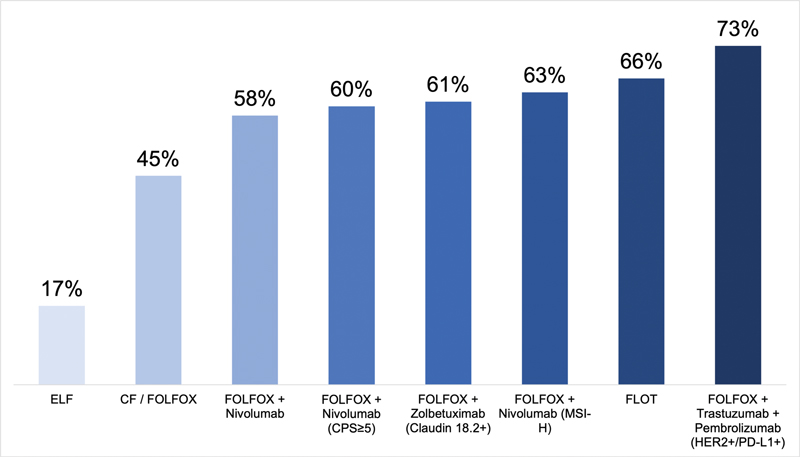
Fig. 1 Overall response rates of the therapeutic regimens used in advanced gastric cancer. Abbreviations: ELF, etoposide, leucovorin, 5-fluorouracil; CF, cisplatin, 5-fluorouracil; FOLFOX, 5-fluorouracil and leucovorin combined with oxaliplatin; CPS, combined positive score; MSI-H, high-frequency microsatellite instability; FLOT, 5-fluorouracil, leucovorin, oxaliplatin, docetaxel; HER2, human epidermal receptor 2; PD-L1, programmed cell death-ligand 1.
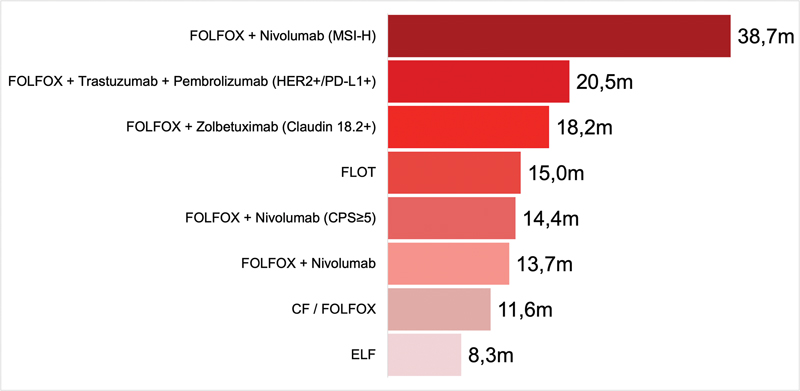
Fig. 2 Overall survival associated with the therapeutic regimens used in advanced gastric cancer. Abbreviations: ELF, etoposide, leucovorin, 5-fluorouracil; CF, cisplatin, 5-fluorouracil; FOLFOX, 5-fluorouracil and leucovorin combined with oxaliplatin; CPS, combined positive score; MSI-H, high-frequency microsatellite instability; FLOT, 5-fluorouracil, leucovorin, oxaliplatin, docetaxel; HER2, human epidermal receptor 2; PD-L1, programmed cell death-ligand 1.
Advanced GC portends a dismal prognosis, and the first therapeutic regimens used in the systemic therapy of the disease were characterized by poor efficacy and high toxicity.
We searched for articles in the PubMed database using the following search strategy and Medical Subject Headings (MeSH): gastric cancer AND treatment AND molecular AND precision medicine. The latest publications and meeting proceedings related to the topic were also reviewed.
A new classification based on the main molecular abnormalities was recently proposed by The Cancer Genome Atlas (TCGA) project
| Molecular subtype | Frequency | Characteristics |
|---|---|---|
| Chromosomal instability (CIN) | 50% | • The incidence is increased in esophagogastric tumors; • Usually present intestinal-type histology; • TP53 mutations, and HER2 and KRAS amplifications. |
| High-frequency microsatellite instability (MSI-H) | 22% | • The incidence is higher in elderly patients; • Characterized by a high tumor mutational burden; • Frequent silencing of MLH1. |
| Genomically stable (GS) | 20% | • Typically diagnosed at an earlier age; • Diffuse-type histology usually present; • Tends to be located at the distal portions of the stomach; • CDH1, ARID1A, and RHOA mutations. |
| Epstein-Barr virus (EBV) | 9% | • Frequently located at the fundus and gastric body; • Lower rate of nodal metastases; • Better survival rates; • PIK3CA mutations and silencing of the CDKN2A promoter. |
In the current clinical practice, the molecular evaluation of GC must involve the test for overexpression/amplification of the human epidermal growth factor receptor 2 (HER2), high-frequency microsatellite instability (MSI-H), programmed cell death-ligand 1 (PD-L1) expression, and, more recently, claudin 18.2 expression. Such findings influence the decision-making process and therapy for metastatic disease.
Approximately 10 to 20% of GCs present amplification of the HER2 gene, which results in the overexpression of HER2, a receptor tyrosine kinase member of the epidermal growth factor receptor (EGFR) family commonly found in the chromosomal-instability subtype.
Expression of PD-L1 and deficient DNA mismatch repair (dMMR) mechanism are also important predictive biomarkers in GC.
The standard of care for unresectable locally-advanced or metastatic GC is the combination of fluoropyrimidines and platins. The addition of monoclonal antibodies will be based on the expression of biomarkers in the tumor tissue.
Expression of PD-L1 may be measured by the number of PD-L1-stained tumor cells divided by the total number of viable tumor cells and multiplied by 100, which is called tumor proportion score (TPS), or as the total number of lymphocytes, macrophages, and PD-L1-stained tumor cells divided by the total number of viable tumor cells and multiplied by 100, which is called combined positive score (CPS).
Pembrolizumab associated with oxaliplatin-based chemotherapy is another initial treatment option. In the phase-III KEYNOTE-859 study, with 1,579 HER2-negative patients, the addition of pembrolizumab to chemotherapy improved the median OS (12.9 months versus 11.5 months; HR: 0.78; 95%CI: 0.70–0.87) and PFS (6.9 months versus 5.6 months; HR: 0.76; 95%CI: 0.67–0.85) compared to the arm which received placebo associated with chemotherapy.
The addition of trastuzumab to chemotherapy is considered in patients with HER2-positive tumors, which are defined by 3+ immunohistochemistry (IHC) staining or 2+ and positive fluorescent in-situ hybridization (FISH). The addition of pembrolizumab to trastuzumab is also suggested, based on the phase-III KEYNOTE-811 study.
The benefit of trastuzumab in advanced HER2-positive GC was addressed in the phase-III ToGA trial,
The efficacy and safety of trastuzumab deruxtecan (T-Dxd), an antibody-drug conjugate, were evaluated in patients with HER2-positive GC whose disease progressed after the initial trastuzumab-based therapy.
Regarding bispecific antibodies, zanidatamab, which targets 2 distinct HER2 epitopes, was evaluated in a phase-I study,
| Clinical setting | Study number (and/or name) | Intervention/Treatment |
|---|---|---|
| | ||
| First line | NCT05152147 (HERIZON-GEA-01) | Trastuzumab, zanidatamab, tislelizumab, chemotherapy |
| Second line | NCT05427383 | KN026, chemotherapy |
| Second line | NCT05002127 (ASPEN-06) | Evorpacept (ALX148), trastuzumab, ramucirumab, chemotherapy |
| Second line | NCT04704934 (DESTINY-Gastric04) | Trastuzumab deruxtecan, ramucirumab, chemotherapy |
| | ||
| First line | NCT05919381 | Gentuximab, chemotherapy |
| Second line | NCT03081143 (RAMIRIS) | Ramucirumab, chemotherapy |
| Third line | NCT04879368 (INTEGRATE IIb) | Regorafenib, nivolumab, chemotherapy |
| | ||
| First line | NCT05052801 (FORTITUDE-101) | Bemarituzumab, chemotherapy |
| First line | NCT05111626 (FORTITUDE-102) | Bemarituzumab, nivolumab, chemotherapy |
| | ||
| First line | NCT05918094 | Sintilimab, chemotherapy |
| First line | NCT05008783 | AK104, chemotherapy |
| First line | NCT05677490 | Nivolumab, chemotherapy |
| First line | NCT05568095 (STAR-221) | Domvanalimab, zimberelimab, nivolumab, chemotherapy |
| | ||
| First line | NCT03801668 | Chemotherapy (albumin-bound paclitaxel, oxaliplatin, S-1) |
Abbreviations: FGFR2, fibroblast growth factor receptor 2; HER2, human epidermal receptor 2; NCT, National Clinical Trial; PD-1, programmed cell death-1; PD-L1, programmed cell death-ligand 1; VEGFR, vascular endothelial growth factor receptor.
In cases of dMMR/MSI-H GEA identified through immunohistochemistry, it is highly recommended that the patients receive immune checkpoint inhibition. The greater benefit of the combination therapy was suggested in a subgroup analysis of the CheckMate 649 trial,
As with the first-line therapy, the second-line therapy also aims to control symptoms and increase survival. For patients with dMMR/MSI-H GEA, pembrolizumab remains as an option if it has not been administered as the first-line therapy. It has been subsequently established
Between 5% and 19% of gastric adenocarcinomas have high levels of TMB, which represents the number of mutations per megabase (mut/Mb) harbored by tumor cells.
New diagnostic techniques have contributed to the characterization of the genetic profile of GC and to the identification of new potential molecular targets. Claudin 18.2, a component of intercellular junctions, is commonly expressed in multiple cancers, including GC, and is not expressed in any healthy tissues, apart from the gastric mucosa. Zolbetuximab, an experimental monoclonal antibody that targets claudin 18.2, was evaluated in combination with oxaliplatin-based chemotherapy in the SPOTLIGHT
Inhibition of the vascular endothelial growth factor (VEGF) receptor (VEGFR) reduces tumor growth and vascularization.
Ramucirumab is a recombinant monoclonal antibody that binds to VEGF receptor 2 (VEGFR2), blocking receptor activation. At least two trials, REGARD
Different types of agents targeting fibroblast growth factor receptors (FGFRs) have been explored, however, without robust clinical evidence. Bemarituzumab has shown some promising results as the first-line treatment for metastatic GC. The phase-II FIGHT study
Activation of the MET proto-oncogene pathway is associated with tumor invasiveness and poor disease prognosis. The anti-MET monoclonal antibody onartuzumab was studied in combination with FOLFOX versus placebo plus FOLFOX in metastatic HER2-negative GEA patients, and the addition of anti-MET did not improve the outcomes in the general population or in MET-positive patients identified by through immunohistochemistry.
The phase-III STAR-221 trial
Neurotrophic tropomyosin-related kinase (NTRK) gene fusions (NTRK1, NTRK2, and NTRK3) lead to the expression of constitutively-active chimeric tropomyosin receptor kinase (TRK) proteins (TRKA, TRKB, and TRKC), which act as potential oncogenic drivers across various types of tumors. In GC, NTRK fusions are exceedingly rare, but they may indicate an aggressive phenotype. Larotrectinib and entrectinib, both TRK inhibitors, have shown remarkable efficacy against NTRK fusion-positive tumors, regardless of tumor type (“tumor-agnostic”).
Substantial advances have been made in the treatment of GC; however, more research is needed to optimize treatment strategies. For patients with gastric adenocarcinoma who do not overexpress HER2 and are not candidates for immunotherapy (CPS < 5–low or absent PD-L1 expression), the choice should be a dual classic combination containing platinum and fluoropyrimidine (such as FOLFOX or CapOX).
Phase-III studies on second-line metastatic therapy showed that paclitaxel, docetaxel, and irinotecan increase OS in relation to clinical support, with similar results. One of these studies
The combination of trifluridine and tipiracil hydrochloride forms TAS-102, an oral agent that is an option for third-line or subsequent therapy in patients who maintain good performance status after undergoing treatment with two or more agents. The effectiveness of the regimen was suggested in the TAGS trial.
Gastric cancer is a markedly heterogeneous disease whose epidemiological, histological and molecular characteristics must be comprehensively understood for a successful therapeutic development. Novel therapeutic targets have been identified in the past few years, with several ongoing studies evaluating targeted therapies (
Precision medicine has gradually evolved, following advances in genomics, molecular biology and diagnostic technologies. It aims to offer more efficient and personalized treatment for patients, seeking to identify the therapeutic target and perform prognostic and predictive stratifications to achieve better survival results with minimal toxicity.
The fact that GC presents genetic variations among different patients and/or in the same patient during the course of the disease should drive investigations into the molecular characteristics present in the tumor tissue and evaluations of the use of circulating biomarkers to predict and monitor disease progression, as well as the response to treatment. Targeted therapies are considered one of the key points in new effective antitumor drug development, and they should be available to patient subgroups that could benefit from them.
Despite the advances in personalized medicine, Brazil still has many obstacles to the application of personalized treatment, such as difficulty in accessing laboratory tests and medications, as well as poor infrastructure. In summary, we expected that extensive research combined with clinical trials will lead to advances in the diagnosis and treatment of such a complex disease, hopefully, with significant improvements in the access of the population to the innovations that aim to increase survival and improve quality of life with minimal toxicity burden.
Gastric cancer (GC) is a heterogeneous disease characterized by high recurrence rates and unfavorable prognosis, ranking fifth in both incidence and cancer-related deaths worldwide.1 The worldwide incidence of GC varies by geographic region, but low- and middle-income countries concentrate the majority of cases. In Brazil, the estimated yearly figure from 2023 to 2025 is of 21,480 new cases (13,340 cases in men and 8,140 cases in women), corresponding to the estimated risk of 9.94 cases per 100 thousand inhabitants.2 Several risk factors have been implicated in the pathogenesis of this neoplasm, including obesity, smoking, alcohol consumption, and infections by the Epstein-Barr virus and Helicobacter pylori.1 3 Most GCs arise sporadically, while hereditary cancer predisposition syndromes are responsible for a small portion of the cases.
Precision medicine was recently developed; it is innovative for this neoplasm, and it aims to adjust the clinical decision to the specific characteristics of individuals, such as the person’s genetic characteristics and/or the genetic profile of the tumor. In the past few decades, the management of advanced GC has evolved largely due to therapeutic development tailored to actionable molecular abnormalities. A significant progress in the efficacy of systemic therapy has been observed with the clinical applicability of precision medicine (Figs. 1 2). The objectives of precision medicine are to identify a target for prognostic and predictive stratification, and selection of treatment that provides improved responses with reduced toxicity. The development of the technology used for DNA sequencing, such as next-generation sequencing (NGS), which is capable of characterizing the tumor genome, has been vital for the identification of potential therapeutic targets and, consequently, to meet the objectives to offer better selective therapies with minimum adverse events.
Fig. 1 Overall response rates of the therapeutic regimens used in advanced gastric cancer. Abbreviations: ELF, etoposide, leucovorin, 5-fluorouracil; CF, cisplatin, 5-fluorouracil; FOLFOX, 5-fluorouracil and leucovorin combined with oxaliplatin; CPS, combined positive score; MSI-H, high-frequency microsatellite instability; FLOT, 5-fluorouracil, leucovorin, oxaliplatin, docetaxel; HER2, human epidermal receptor 2; PD-L1, programmed cell death-ligand 1.
Fig. 2 Overall survival associated with the therapeutic regimens used in advanced gastric cancer. Abbreviations: ELF, etoposide, leucovorin, 5-fluorouracil; CF, cisplatin, 5-fluorouracil; FOLFOX, 5-fluorouracil and leucovorin combined with oxaliplatin; CPS, combined positive score; MSI-H, high-frequency microsatellite instability; FLOT, 5-fluorouracil, leucovorin, oxaliplatin, docetaxel; HER2, human epidermal receptor 2; PD-L1, programmed cell death-ligand 1.
Advanced GC portends a dismal prognosis, and the first therapeutic regimens used in the systemic therapy of the disease were characterized by poor efficacy and high toxicity.4 5 The incorporation of targeted therapies and immunotherapy in the past few years has ushered in a new era in the systemic therapy of GC. The deeper understanding of the molecular biology of the disease and the advances observed in cancer therapies provide us optimism for the continuing improvement of the treatment of the GC in the next few years. The present review aims to describe the progress in the systemic therapies observed in the past few decades, as well as to present future perspectives for the treatment of this challenging disease.
We searched for articles in the PubMed database using the following search strategy and Medical Subject Headings (MeSH): gastric cancer AND treatment AND molecular AND precision medicine. The latest publications and meeting proceedings related to the topic were also reviewed.
A new classification based on the main molecular abnormalities was recently proposed by The Cancer Genome Atlas (TCGA) project6 to identify possible therapeutic targets in four molecularly-distinct subtypes of GC (Table 1).
| Molecular subtype | Frequency | Characteristics |
|---|---|---|
| Chromosomal instability (CIN) | 50% | • The incidence is increased in esophagogastric tumors; • Usually present intestinal-type histology; • TP53 mutations, and HER2 and KRAS amplifications. |
| High-frequency microsatellite instability (MSI-H) | 22% | • The incidence is higher in elderly patients; • Characterized by a high tumor mutational burden; • Frequent silencing of MLH1. |
| Genomically stable (GS) | 20% | • Typically diagnosed at an earlier age; • Diffuse-type histology usually present; • Tends to be located at the distal portions of the stomach; • CDH1, ARID1A, and RHOA mutations. |
| Epstein-Barr virus (EBV) | 9% | • Frequently located at the fundus and gastric body; • Lower rate of nodal metastases; • Better survival rates; • PIK3CA mutations and silencing of the CDKN2A promoter. |
In the current clinical practice, the molecular evaluation of GC must involve the test for overexpression/amplification of the human epidermal growth factor receptor 2 (HER2), high-frequency microsatellite instability (MSI-H), programmed cell death-ligand 1 (PD-L1) expression, and, more recently, claudin 18.2 expression. Such findings influence the decision-making process and therapy for metastatic disease.
Approximately 10 to 20% of GCs present amplification of the HER2 gene, which results in the overexpression of HER2, a receptor tyrosine kinase member of the epidermal growth factor receptor (EGFR) family commonly found in the chromosomal-instability subtype.6 These patients with advanced disease may benefit from the addition trastuzumab to chemotherapy, which is a recombinant humanized monoclonal antibody that targets the extracellular domain IV of the HER2 protein.7
Expression of PD-L1 and deficient DNA mismatch repair (dMMR) mechanism are also important predictive biomarkers in GC.8 9 Programmed cell death receptor-1 (PD-1) is expressed in T-cells, and pembrolizumab and nivolumab, monoclonal antibodies targeting PD-1, provide antitumor activity by releasing function. Metastatic GC patients whose tumors exhibit dMMR and/or MSI-H, as well as those with high tumor mutational burden (TMB), may also experience clinical benefits from PD-1 inhibitors.10 The identification of the predictive biomarkers to precisely select the patients who will derive clinical benefits from immunotherapy is one of the main current challenges in precision oncology, and it has been intensively investigated worldwide.
The standard of care for unresectable locally-advanced or metastatic GC is the combination of fluoropyrimidines and platins. The addition of monoclonal antibodies will be based on the expression of biomarkers in the tumor tissue.
Expression of PD-L1 may be measured by the number of PD-L1-stained tumor cells divided by the total number of viable tumor cells and multiplied by 100, which is called tumor proportion score (TPS), or as the total number of lymphocytes, macrophages, and PD-L1-stained tumor cells divided by the total number of viable tumor cells and multiplied by 100, which is called combined positive score (CPS).8 11 Studies on GC have predominantly used the CPS as the main score to measure PD-L1 expression. In the phase-III CheckMate 649 study,8 1,581 previously-untreated, unresectable and HER2-negative patients were randomized to receive nivolumab plus chemotherapy or chemotherapy alone (5-fluorouracil [5-FU] and leucovorin combined with oxaliplatin [FOLFOX] or capecitabine plus oxaliplatin [CAPOX]). Compared to chemotherapy alone, nivolumab plus chemotherapy significantly increased the overall survival (OS) in the whole population (median: 13.8 months versus 11.6 months; hazard ratio [HR]: 0.79; 95% confidence interval [95%CI]: 0.71–0.88) and progression-free survival (PFS) (median: 7.7 months versus 6.9 months; HR: 0.79; 95%CI: 0.70–0.89). In the analysis of OS in the CPS ≥ 5 population, which was the primary endpoint of the study,8 the benefit was even greater, with a median OS of 14.4 months versus 11.1 months (HR: 0.70; 95%CI: 0.61–0.81), and a median PFS of 8.1 months versus 6.1 months (HR: 0.70; 95%CI: 0.60–0.81). Based on the CheckMate 6498 findings, nivolumab was approved by the United States Food and Drug Administration (FDA) and by the Brazilian Health Regulatory Agency (Agência Nacional de Vigilância Sanitária, ANVISA, in Portuguese) for every patient with advanced GC, regardless of the PD-L1 expression. On the other hand, European agencies, and the guidelines of the United States National Comprehensive Cancer Network (NCCN) and of the American Society of Clinical Oncology (ASCO) suggest that the immune checkpoint inhibitor should be added to chemotherapy only in patients with CPS ≥ 5.12 The decision to add nivolumab in patients with CPS between 1 and 4 should be made in a case-by-case basis.
Pembrolizumab associated with oxaliplatin-based chemotherapy is another initial treatment option. In the phase-III KEYNOTE-859 study, with 1,579 HER2-negative patients, the addition of pembrolizumab to chemotherapy improved the median OS (12.9 months versus 11.5 months; HR: 0.78; 95%CI: 0.70–0.87) and PFS (6.9 months versus 5.6 months; HR: 0.76; 95%CI: 0.67–0.85) compared to the arm which received placebo associated with chemotherapy.9 The benefits were consistent across all subgroups, including those with CPS ≥ 1 (HR: 0.74; 95%CI 0.65–0.84 for OS; and HR: 0.72; 95%CI: 0.63–0.82 for PFS), CPS ≥ 10 (HR: 0.65; 95%CI: 0.53–0.79 for OS; and HR: 0.62; 95%CI: 0.51–0.76 for PFS), and those with MSI-H (HR: 0.34; 95%CI: 0.18–0.66 for OS; and HR: 0.27; 95%CI: 0.14–0.53 for PFS). Neither the CheckMate 649 nor the KEYNOTE-859 demonstrated statistically significant benefits in terms of OS in the population of patients with CPS < 1 for PD-L1 expression. Pembrolizumab as a single agent is not recommended based on the results of the KEYNOTE-062 study.13 Among 763 patients with untreated, locally-advanced/unresectable or metastatic gastric/gastroesophageal junction cancer with CPS ≥ 1 for PD-L1 enrolled, pembrolizumab was noninferior to chemotherapy in terms of OS, which was the primary endpoint of the study (median: 10.6 versus 11.1 months; HR: 0.91; 95%CI: 0.69–1.18).13 Pembrolizumab prolonged OS compared to chemotherapy in patients with CPS ≥ 10 (median: 17.4 versus 10.8 months; HR: 0.69; 95%CI: 0.49–0.97), but this difference was not statistically tested.
The addition of trastuzumab to chemotherapy is considered in patients with HER2-positive tumors, which are defined by 3+ immunohistochemistry (IHC) staining or 2+ and positive fluorescent in-situ hybridization (FISH). The addition of pembrolizumab to trastuzumab is also suggested, based on the phase-III KEYNOTE-811 study.14
The benefit of trastuzumab in advanced HER2-positive GC was addressed in the phase-III ToGA trial,7 which compared standard chemotherapy (cisplatin plus infusional 5-FU or capecitabine) with or without trastuzumab. The objective response rate (ORR) and OS were higher with trastuzumab (47% versus 35%; 13.8 months versus 11.1 months; HR: 0.74; 95%CI: 0.60–0.91 respectively). An exploratory analysis of the subgroups defined by HER2 expression showed that trastuzumab was more effective in prolonging survival in individuals with 3+ IHC (HR: 0.66; 95%CI: 0.50–0.87) compared to patients with 2+ IHC (HR: 0.78; 95%CI: 0.55–1.10). The value of adding pembrolizumab to trastuzumab and chemotherapy was confirmed in the multicenter phase-III KEYNOTE-811 study,14 in which 698 patients were randomized to receive pembrolizumab or placebo administered with trastuzumab plus platinum-containing cytotoxic chemotherapy. The ORR was significantly higher with pembrolizumab (73% versus 60%), as well as the rate of complete responses (17% versus 11%). A recently-published interim analysis38 also demonstrated a significant increase in PFS, mainly in PD-L1-positive tumors (CPS ≥ 1), with a median PFS of 10.9 versus 7.3 months (HR: 0.71; 95%CI: 0.59–0.86).
The efficacy and safety of trastuzumab deruxtecan (T-Dxd), an antibody-drug conjugate, were evaluated in patients with HER2-positive GC whose disease progressed after the initial trastuzumab-based therapy.15 16 In a non-randomized phase-II study (DESTINY-Gastric02),16 T-Dxd demonstrated ORR of 42% as second-line therapy. In a randomized trial (DESTINY-Gastric01) evaluating patients whose disease had progressed after two previous therapies,15 which included trastuzumab, fluoropyrimidines, and platins, the subjects were randomized to receive T-Dxd or chemotherapy, and there was an improvement in OS (13.0 months versus 8.0 months) and PFS (5.6 versus 3.5 months). Based on these data, T-Dxd was approved in the United States and Brazil for the treatment of cases of advanced HER2-positive gastric or gastroesophageal junction adenocarcinoma that has experienced disease progression while on trastuzumab.
Regarding bispecific antibodies, zanidatamab, which targets 2 distinct HER2 epitopes, was evaluated in a phase-I study,17 in which this monoclonal antibody was well tolerated and yielded long-lasting responses in pretreated GC patients. In a phase-II study,18 an ORR of 79% was demonstrated with zanidatamab plus chemotherapy. Based on these findings, a phase-III study (HERIZON-GEA-01) (Table 2) was designed to evaluate the efficacy and safety profile of zanidatamab plus chemotherapy with or without tislelizumab, an anti-PD-1 monoclonal immunoglobulin G4 antibody, versus the standard of care (trastuzumab plus chemotherapy) as a first-line treatment for patients with advanced/metastatic HER2-positive gastroesophageal adenocarcinomas (GEAs)39.
| Clinical setting | Study number (and/or name) | Intervention/Treatment |
|---|---|---|
| HER2 | ||
| First line | NCT05152147 (HERIZON-GEA-01)39 | Trastuzumab, zanidatamab, tislelizumab, chemotherapy |
| Second line | NCT05427383 | KN026, chemotherapy |
| Second line | NCT05002127 (ASPEN-06) | Evorpacept (ALX148), trastuzumab, ramucirumab, chemotherapy |
| Second line | NCT04704934 (DESTINY-Gastric04) | Trastuzumab deruxtecan, ramucirumab, chemotherapy |
| VEGFR | ||
| First line | NCT05919381 | Gentuximab, chemotherapy |
| Second line | NCT03081143 (RAMIRIS) | Ramucirumab, chemotherapy |
| Third line | NCT04879368 (INTEGRATE IIb) | Regorafenib, nivolumab, chemotherapy |
| FGFR2 | ||
| First line | NCT05052801 (FORTITUDE-101) | Bemarituzumab, chemotherapy |
| First line | NCT05111626 (FORTITUDE-102) | Bemarituzumab, nivolumab, chemotherapy |
| Anti-PD-1/PD-L1 | ||
| First line | NCT05918094 | Sintilimab, chemotherapy |
| First line | NCT05008783 | AK104, chemotherapy |
| First line | NCT05677490 | Nivolumab, chemotherapy |
| First line | NCT05568095 (STAR-221) | Domvanalimab, zimberelimab, nivolumab, chemotherapy |
| Unselected population | ||
| First line | NCT03801668 | Chemotherapy (albumin-bound paclitaxel, oxaliplatin, S-1) |
Abbreviations: FGFR2, fibroblast growth factor receptor 2; HER2, human epidermal receptor 2; NCT, National Clinical Trial; PD-1, programmed cell death-1; PD-L1, programmed cell death-ligand 1; VEGFR, vascular endothelial growth factor receptor.
In cases of dMMR/MSI-H GEA identified through immunohistochemistry, it is highly recommended that the patients receive immune checkpoint inhibition. The greater benefit of the combination therapy was suggested in a subgroup analysis of the CheckMate 649 trial,8 since among 44 patients with dMMR/MSI-H tumors who were randomized to receive nivolumab plus chemotherapy, the median OS was of 38.7 months versus 12.3 months among the patients submitted to chemotherapy alone (HR: 0.38; 95%CI: 0.17-0.84), and the benefit was even greater in the subgroup of patients with CPS ≥ 5 and dMMR (median OS: 44.8 months versus 8.8 months; HR: 0.32).
As with the first-line therapy, the second-line therapy also aims to control symptoms and increase survival. For patients with dMMR/MSI-H GEA, pembrolizumab remains as an option if it has not been administered as the first-line therapy. It has been subsequently established10 that immune checkpoint inhibition appears to benefit a subset of patients with dMMR tumors, regardless of the anatomical site of origin or tissue histology. Therefore, in 2017, the FDA approved pembrolizumab for the treatment of advanced solid tumors that harbor dMMR/MSI-H and have progressed after the first-line treatment (treatment-agnostic approval).
Between 5% and 19% of gastric adenocarcinomas have high levels of TMB, which represents the number of mutations per megabase (mut/Mb) harbored by tumor cells.10 It appears to be an independent biomarker of benefit for immunotherapy if TMB ≥ 10 mut/Mb after progression while on standard regimens. In the phase-II KEYNOTE-158 study,10 which enrolled 24 GC patients, there were 11 objective responses (45.8%), 4 of which were complete, and the median PFS was of 11 months.
New diagnostic techniques have contributed to the characterization of the genetic profile of GC and to the identification of new potential molecular targets. Claudin 18.2, a component of intercellular junctions, is commonly expressed in multiple cancers, including GC, and is not expressed in any healthy tissues, apart from the gastric mucosa. Zolbetuximab, an experimental monoclonal antibody that targets claudin 18.2, was evaluated in combination with oxaliplatin-based chemotherapy in the SPOTLIGHT19 and GLOW20 trials and demonstrated an improvement in survival (18.2 versus 15.5 months; HR: 0.750; p = 0.0053; and 14.3 versus 12.1 months; HR: 0.771; p = 0.0118 respectively) in the population of patients with locally-advanced or unresectable, HER2-negative, treatment-naïve GC.
Inhibition of the vascular endothelial growth factor (VEGF) receptor (VEGFR) reduces tumor growth and vascularization.21 The benefit of bevacizumab (a monoclonal antibody that binds to soluble VEGF and prevents binding to VEGFR) for gastric adenocarcinomas and GEAs is uncertain. An improvement in survival after adding bevacizumab to capecitabine plus cisplatin could not be shown in the global phase-III AVAGAST trial.22
Ramucirumab is a recombinant monoclonal antibody that binds to VEGF receptor 2 (VEGFR2), blocking receptor activation. At least two trials, REGARD23 e RAINBOW,24 demonstrated an improvement in survival with the ramucirumab therapy, either as a monotherapy or in combination with paclitaxel in patients with previously-treated advanced GEA. Folinic acid, fluorouracil, and irinotecan (FOLFIRI) plus ramucirumab is a reasonable alternative to ramucirumab plus paclitaxel.25 Additionally, results from the phase-III INTEGRATE IIa study26 presented at the ASCO 2023 Gastrointestinal Cancers Symposium showed that regorafenib significantly improved OS (4.5 months versus 4.0 months; HR: 0.70; 95%CI: 0.53–0.92) in patients under later-line treatment for advanced GEA.
Different types of agents targeting fibroblast growth factor receptors (FGFRs) have been explored, however, without robust clinical evidence. Bemarituzumab has shown some promising results as the first-line treatment for metastatic GC. The phase-II FIGHT study27 was designed to evaluate the efficacy of the bemarituzumab plus oxaliplatin-based chemotherapy regimen and demonstrated a 2-month improvement in PFS (9.5 months in the bemarituzumab group and 7.4 months in the placebo group; HR: 0.68; 95%CI: 0.44–1.04).
Activation of the MET proto-oncogene pathway is associated with tumor invasiveness and poor disease prognosis. The anti-MET monoclonal antibody onartuzumab was studied in combination with FOLFOX versus placebo plus FOLFOX in metastatic HER2-negative GEA patients, and the addition of anti-MET did not improve the outcomes in the general population or in MET-positive patients identified by through immunohistochemistry.28 Rilotumumab, a fully-humanized monoclonal antibody that neutralizes the hepatocyte growth factor (HGF), thus preventing MET activation, was also studied in association with chemotherapy in the same patient profile, and neither was it effective in improving results.29 30 31
The phase-III STAR-221 trial40 evaluated the safety and efficacy of various combinations of anti-T-cell immunoreceptor with immunoglobulin and immunoreceptor tyrosine-based inhibitory motif domains (anti-TIGIT; domvanalimab) and anti-PD-1 (zimberelimab) monoclonal antibodies in patients with unresectable or metastatic locally-advanced GEA (Table 2). The combination of domvanalimab and zimberelimab with FOLFOX achieved an 80% ORR in patients with positive PD-L1 (tumor positivity area ≥ 5%).
Neurotrophic tropomyosin-related kinase (NTRK) gene fusions (NTRK1, NTRK2, and NTRK3) lead to the expression of constitutively-active chimeric tropomyosin receptor kinase (TRK) proteins (TRKA, TRKB, and TRKC), which act as potential oncogenic drivers across various types of tumors. In GC, NTRK fusions are exceedingly rare, but they may indicate an aggressive phenotype. Larotrectinib and entrectinib, both TRK inhibitors, have shown remarkable efficacy against NTRK fusion-positive tumors, regardless of tumor type (“tumor-agnostic”).33 In 2018, the FDA approved larotrectinib for the treatment of solid tumors with NTRK gene fusions in adult and pediatric patients, based on data from three multicenter clinical trials.34 These trials treated 55 patients with metastatic or unresectable solid tumors harboring NTRK gene fusions, achieving a 75% ORR with a complete response rate of 22%.34 In 2019, entrectinib received FDA approval for the same indications, supported by data from three clinical trials35 involving 54 treated patients, demonstrating an ORR of 57% with a complete response rate of 7%. Both drugs have shown durable and clinically-significant responses with manageable safety profiles, making them recommended second-line or subsequent treatment options for patients with gastric tumors positive for NTRK gene fusions.
Substantial advances have been made in the treatment of GC; however, more research is needed to optimize treatment strategies. For patients with gastric adenocarcinoma who do not overexpress HER2 and are not candidates for immunotherapy (CPS < 5–low or absent PD-L1 expression), the choice should be a dual classic combination containing platinum and fluoropyrimidine (such as FOLFOX or CapOX).
Phase-III studies on second-line metastatic therapy showed that paclitaxel, docetaxel, and irinotecan increase OS in relation to clinical support, with similar results. One of these studies36 included 202 patients and compared second-line chemotherapy (docetaxel or irinotecan) versus best supportive care. The median OS favored the chemotherapy arm (5.3 versus 3.8 months; HR: 0.65; p = 0.007), with no difference observed between docetaxel and irinotecan (OS of 5.2 versus 6.5 months; p = 0.116).36
The combination of trifluridine and tipiracil hydrochloride forms TAS-102, an oral agent that is an option for third-line or subsequent therapy in patients who maintain good performance status after undergoing treatment with two or more agents. The effectiveness of the regimen was suggested in the TAGS trial.37 In this study with 507 heavily-pretreated GEA patients (more than 60% in each group had previously received 3 or more chemotherapy regimens), TAS-102 significantly improved OS relative to placebo (median: 5.7 versus 3.6 months) and was reasonably well tolerated.37
Gastric cancer is a markedly heterogeneous disease whose epidemiological, histological and molecular characteristics must be comprehensively understood for a successful therapeutic development. Novel therapeutic targets have been identified in the past few years, with several ongoing studies evaluating targeted therapies (Table 2).
Precision medicine has gradually evolved, following advances in genomics, molecular biology and diagnostic technologies. It aims to offer more efficient and personalized treatment for patients, seeking to identify the therapeutic target and perform prognostic and predictive stratifications to achieve better survival results with minimal toxicity.
The fact that GC presents genetic variations among different patients and/or in the same patient during the course of the disease should drive investigations into the molecular characteristics present in the tumor tissue and evaluations of the use of circulating biomarkers to predict and monitor disease progression, as well as the response to treatment. Targeted therapies are considered one of the key points in new effective antitumor drug development, and they should be available to patient subgroups that could benefit from them.
Despite the advances in personalized medicine, Brazil still has many obstacles to the application of personalized treatment, such as difficulty in accessing laboratory tests and medications, as well as poor infrastructure. In summary, we expected that extensive research combined with clinical trials will lead to advances in the diagnosis and treatment of such a complex disease, hopefully, with significant improvements in the access of the population to the innovations that aim to increase survival and improve quality of life with minimal toxicity burden.
Journal: Brazilian Journal of Oncology
DOI: 10.1055/s-00059887
e-issn: 2526-8732
Publisher: Thieme Revinter Publicações Ltda.
Publisher address: Rua do Matoso 170, Rio de Janeiro, RJ, CEP 20270-135, Brazil
Falha na comunicação com o serviço de processamento. Tente novamente.
1. Bray, F and Laversanne, M and Sung, H. Global cancer statistics 2022: GLOBOCAN estimates of incidence and mortality worldwide for 36 cancers in 185 countries. CA Cancer J Clin [online]. 2024, vol. 74, p. 229-263. https://doi.org/10.3322/caac.21834 Ver referência
2. Rev Bras Cancerol ;69(1) [online]. Available from: <>.
3. ESMO Guidelines Committee. Electronic address: clinicalguidelines@esmo.org. Gastric cancer: ESMO Clinical Practice Guideline for diagnosis, treatment and follow-up. Ann Oncol [online]. 2022, vol. 33, p. 1005-1020.
4. Murad, A M and Santiago, F F and Petroianu, A and Rocha, P R and Rodrigues, M A and Rausch, M. Modified therapy with 5-fluorouracil, doxorubicin, and methotrexate in advanced gastric cancer. Cancer [online]. 1993, vol. 72, p. 37-41. https://doi.org/10.1002/1097-0142(19930701)72:13.0.co;2-p Ver referência
5. Moehler, M and Eimermacher, A and Siebler, J. Randomised phase II evaluation of irinotecan plus high-dose 5-fluorouracil and leucovorin (ILF) vs 5-fluorouracil, leucovorin, and etoposide (ELF) in untreated metastatic gastric cancer. Br J Cancer [online]. 2005, vol. 92, p. 2122-2128. https://doi.org/10.1038/sj.bjc.6602649 Ver referência
6. Cancer Genome Atlas Research Network. Comprehensive molecular characterization of gastric adenocarcinoma. Nature [online]. 2014, vol. 513, p. 202-209. https://doi.org/10.1038/nature13480 Ver referência
7. ToGA Trial Investigators. Trastuzumab in combination with chemotherapy versus chemotherapy alone for treatment of HER2-positive advanced gastric or gastro-oesophageal junction cancer (ToGA): a phase 3, open-label, randomised controlled trial. Lancet [online]. 2010, vol. 376, p. 687-697.
8. Janjigian, Y Y and Shitara, K and Moehler, M. First-line nivolumab plus chemotherapy versus chemotherapy alone for advanced gastric, gastro-oesophageal junction, and oesophageal adenocarcinoma (CheckMate 649): a randomised, open-label, phase 3 trial. Lancet [online]. 2021, vol. 398, p. 27-40.
9. KEYNOTE-859 investigators. Pembrolizumab plus chemotherapy versus placebo plus chemotherapy for HER2-negative advanced gastric cancer (KEYNOTE-859): a multicentre, randomised, double-blind, phase 3 trial. Lancet Oncol [online]. 2023, vol. 24, p. 1181-1195. https://doi.org/10.1016/S1470-2045(23)00515-6 Ver referência
10. Marabelle, A and Le, D T and Ascierto, P A. Efficacy of Pembrolizumab in Patients With Noncolorectal High Microsatellite Instability/Mismatch Repair-Deficient Cancer: Results From the Phase II KEYNOTE-158 Study. J Clin Oncol [online]. 2020, vol. 38, p. 1-10. https://doi.org/10.1200/JCO.19.02105 Ver referência
11. CheckMate 648 Trial Investigators. Nivolumab Combination Therapy in Advanced Esophageal Squamous-Cell Carcinoma. N Engl J Med [online]. 2022, vol. 386, p. 449-462. https://doi.org/10.1056/NEJMoa2111380 Ver referência
12. Shah, M A and Kennedy, E B and Alarcon-Rozas, A E. Immunotherapy and Targeted Therapy for Advanced Gastroesophageal Cancer: ASCO Guideline. J Clin Oncol [online]. 2023, vol. 41, p. 1470-1491. https://doi.org/10.1200/JCO.22.02331 Ver referência
13. Shitara, K and Van Cutsem, E and Bang, Y-J. Efficacy and safety of pembrolizumab or pembrolizumab plus chemotherapy vs chemotherapy alone for patients with first-line, advanced gastric cancer: the KEYNOTE-062 phase 3 randomized clinical trial. JAMA Oncol [online]. 2020, vol. 6, p. 1571-1580.
14. Janjigian, Y Y and Kawazoe, A and Yañez, P. The KEYNOTE-811 trial of dual PD-1 and HER2 blockade in HER2-positive gastric cancer. Nature [online]. 2021, vol. 600, p. 727-730. https://doi.org/10.1038/s41586-021-04161-3 Ver referência
15. DESTINY-Gastric01 Investigators. Trastuzumab Deruxtecan in Previously Treated HER2-Positive Gastric Cancer. N Engl J Med [online]. 2020, vol. 382, p. 2419-2430. https://doi.org/10.1056/NEJMoa2004413 Ver referência
16. Van Cutsem, E and di Bartolomeo, M and Smyth, E. Trastuzumab deruxtecan in patients in the USA and Europe with HER2-positive advanced gastric or gastroesophageal junction cancer with disease progression on or after a trastuzumab-containing regimen (DESTINY-Gastric02): primary and updated analyses from a single-arm, phase 2 study. Lancet Oncol [online]. 2023, vol. 24, p. 744-756. https://doi.org/10.1016/S1470-2045(23)00215-2 Ver referência
17. Meric-Bernstam, F and Hamilton, E P and Beeram, M. Zanidatamab (ZW25) in HER2-expressing gastroesophageal adenocarcinoma (GEA): Results from a phase I study. J Clin Oncol [online]. 2021, vol. 39, p. 164.
18. Elimova, E and Ajani, J A and Burris, H A. Zanidatamab+ chemotherapy as first-line treatment for HER2-expressing metastatic gastroesophageal adenocarcinoma (mGEA). American Society of Clinical Oncology, 2023.
19. Shitara, K and Lordick, F and Bang, Y-J. Zolbetuximab plus mFOLFOX6 in patients with CLDN18.2-positive, HER2-negative, untreated, locally advanced unresectable or metastatic gastric or gastro-oesophageal junction adenocarcinoma (SPOTLIGHT): a multicentre, randomised, double-blind, phase 3 trial. Lancet [online]. 2023, vol. 401, p. 1655-1668.
20. Shah, M A and Shitara, K and Ajani, J A. Zolbetuximab plus CAPOX in CLDN18.2-positive gastric or gastroesophageal junction adenocarcinoma: the randomized, phase 3 GLOW trial. Nat Med [online]. 2023, vol. 29, p. 2133-2141.
21. Lieto, E and Ferraraccio, F and Orditura, M. Expression of vascular endothelial growth factor (VEGF) and epidermal growth factor receptor (EGFR) is an independent prognostic indicator of worse outcome in gastric cancer patients. Ann Surg Oncol [online]. 2008, vol. 15, p. 69-79. https://doi.org/10.1245/s10434-007-9596-0 Ver referência
22. Ohtsu, A and Shah, M A and Van Cutsem, E. Bevacizumab in combination with chemotherapy as first-line therapy in advanced gastric cancer: a randomized, double-blind, placebo-controlled phase III study. J Clin Oncol [online]. 2011, vol. 29, p. 3968-3976. https://doi.org/10.1200/JCO.2011.36.2236 Ver referência
23. REGARD Trial Investigators. Ramucirumab monotherapy for previously treated advanced gastric or gastro-oesophageal junction adenocarcinoma (REGARD): an international, randomised, multicentre, placebo-controlled, phase 3 trial. Lancet [online]. 2014, vol. 383, p. 31-39. https://doi.org/10.1016/S0140-6736(13)61719-5 Ver referência
24. RAINBOW Study Group. Ramucirumab plus paclitaxel versus placebo plus paclitaxel in patients with previously treated advanced gastric or gastro-oesophageal junction adenocarcinoma (RAINBOW): a double-blind, randomised phase 3 trial. Lancet Oncol [online]. 2014, vol. 15, p. 1224-1235. https://doi.org/10.1016/S1470-2045(14)70420-6 Ver referência
25. Lorenzen, S and Thuss-Patience, P and Pauligk, C. FOLFIRI plus ramucirumab versus paclitaxel plus ramucirumab as second-line therapy for patients with advanced or metastatic gastroesophageal adenocarcinoma with or without prior docetaxel - results from the phase II RAMIRIS Study of the German Gastric Cancer Study Group at AIO. Eur J Cancer [online]. 2022, vol. 165, p. 48-57.
26. Pavlakis, N and Shitara, K and Sjoquist, K M. INTEGRATE IIa: A randomised, double-blind, phase III study of regorafenib versus placebo in refractory advanced gastro-oesophageal cancer (AGOC)—A study led by the Australasian Gastro-intestinal Trials Group (AGITG). American Society of Clinical Oncology, 2023.
27. Wainberg, Z A and Enzinger, P C and Kang, Y-K. Bemarituzumab in patients with FGFR2b-selected gastric or gastro-oesophageal junction adenocarcinoma (FIGHT): a randomised, double-blind, placebo-controlled, phase 2 study. Lancet Oncol [online]. 2022, vol. 23, p. 1430-1440.
28. Shah, M A and Cho, J-Y and Tan, I B. A randomized phase II study of FOLFOX with or without the MET inhibitor onartuzumab in advanced adenocarcinoma of the stomach and gastroesophageal junction. Oncologist [online]. 2016, vol. 21, p. 1085-1090.
29. Iveson, T and Donehower, R C and Davidenko, I. Rilotumumab in combination with epirubicin, cisplatin, and capecitabine as first-line treatment for gastric or oesophagogastric junction adenocarcinoma: an open-label, dose de-escalation phase 1b study and a double-blind, randomised phase 2 study. Lancet Oncol [online]. 2014, vol. 15, p. 1007-1018. https://doi.org/10.1016/S1470-2045(14)70023-3 Ver referência
30. Malka, D and François, E and Penault-Llorca, F. FOLFOX alone or combined with rilotumumab or panitumumab as first-line treatment for patients with advanced gastroesophageal adenocarcinoma (PRODIGE 17-ACCORD 20-MEGA): a randomised, open-label, three-arm phase II trial. Eur J Cancer [online]. 2019, vol. 115, p. 97-106.
31. Catenacci, D VT and Tebbutt, N C and Davidenko, I. Rilotumumab plus epirubicin, cisplatin, and capecitabine as first-line therapy in advanced MET-positive gastric or gastro-oesophageal junction cancer (RILOMET-1): a randomised, double-blind, placebo-controlled, phase 3 trial. Lancet Oncol [online]. 2017, vol. 18, p. 1467-1482.
32. Klempner, S J and Shitara, K and Sison, A. STAR-221: A randomized, open-label, multicenter, phase 3 trial of domvanalimab, zimberelimab, and chemotherapy versus nivolumab and chemotherapy in previously untreated, locally advanced, unresectable or metastatic gastric, gastroesophageal junction, and esophageal adenocarcinoma. American Society of Clinical Oncology, 2023.
33. Kim, M and Seo, A N. Molecular Pathology of Gastric Cancer. J Gastric Cancer [online]. 2022, vol. 22, p. 273-305. https://doi.org/10.5230/jgc.2022.22.e35 Ver referência
34. Drilon, A and Laetsch, T W and Kummar, S. Efficacy of larotrectinib in TRK fusion-positive cancers in adults and children. N Engl J Med [online]. 2018, vol. 378, p. 731-739.
35. trial investigators. Entrectinib in patients with advanced or metastatic NTRK fusion-positive solid tumours: integrated analysis of three phase 1-2 trials. Lancet Oncol [online]. 2020, vol. 21, p. 271-282.
36. Kang, J H and Lee, S I and Lim, D H. Salvage chemotherapy for pretreated gastric cancer: a randomized phase III trial comparing chemotherapy plus best supportive care with best supportive care alone. J Clin Oncol [online]. 2012, vol. 30, p. 1513-1518. https://doi.org/10.1200/JCO.2011.39.4585 Ver referência
37. Shitara, K and Doi, T and Dvorkin, M. Trifluridine/tipiracil versus placebo in patients with heavily pretreated metastatic gastric cancer (TAGS): a randomised, double-blind, placebo-controlled, phase 3 trial. Lancet Oncol [online]. 2018, vol. 19, p. 1437-1448.
38. Janjigian, Y Y. “Pembrolizumab plus trastuzumab and chemotherapy for HER2-positive gastric or gastro-oesophageal junction adenocarcinoma: interim analyses from the phase 3 KEYNOTE-811 randomised placebo-controlled trial.”. Lancet (London, England) [online]. , p. 2197-2208. https://doi.org/10.1016/S0140-6736(23)02033-0 Ver referência
39. Tabernero, J. “HERIZON-GEA-01: Zanidatamab + chemo ± tislelizumab for 1L treatment of HER2-positive gastroesophageal adenocarcinoma.”. Future oncology (London, England) [online]. , p. 3255-3266. https://doi.org/10.2217/fon-2022-0595 Ver referência
40. Janjigian, Y Y. EDGE-Gastric Arm A1: Phase 2 study of domvanalimab, zimberelimab, and FOLFOX in first-line (1L) advanced gastroesophageal cancer. JCO [online]. . https://doi.org/10.1200/JCO.2023.41.36_suppl.433248 Ver referência
Dados de acesso insuficientes para visualização no mapa.