
Li-Fraumeni syndrome (LFS) is an uncommon autosomal dominant hereditary predisposition to multiple cancers, primarily linked to TP53 gene mutations.
Patients with LFS and their families face complex decisions about risk communication and prevention strategies, suggesting that clinical and molecular diagnosis may affect quality of life and anxiety.
Here, we investigated one patient with LFS and their family members with a mixed-method approach, including genomic research and psychosocial evaluation. We also describe a novel harmful variant of TP53 in the Brazilian population. The questionnaires implemented revealed that the younger sister of the index case exhibited higher anxiety with a consequent psychosocial impact on her comprehension of the syndrome's implications for her family, with early losses and concerns about affected relatives contributing to distress, as a younger family member.
The general objective of the study was to conduct a cross-sectional analysis of the molecular, clinical, and psychosocial variables of patients and their family members diagnosed with Li-Fraumeni syndrome (LFS), as well as those who are noncarriers of TP53 mutations predisposing them to LFS. This study was conducted before and after molecular genetic testing of a family identified at the Alpha Center Outpatient Clinic of Escola Paulista de Medicina, Universidade Federal de São Paulo (EPM/UNIFESP), based on an index patient who received a clinical diagnosis of LFS in June 2020.
To investigate the impact on the quality of life of relatives up to third-degree of a patient with a clinical diagnosis of LFS by collecting and analyzing their perceptions and attitudes through questionnaires regarding quality of life in pre- and postgenetic counseling.
To perform TP53 gene sequencing in a patient with a clinical diagnosis of LFS (index case) and her family members.
To conduct an in-silico functional analysis of the TP53 gene mutation found in the studied family.
To monitor the clinical management of patients with LFS, evaluating the implementation of neoplasia screening measures and health promotion within their families.
As well as to critically analyze the psychosocial aspects involved in the clinical management of LFS, decision-making, and care measures, using principles of implementation science.
To develop a directive action flowchart to improve the identification, management, and multidisciplinary follow-up of families affected by TP53 mutations and/or LFS at the institutional level (Hospital São Paulo, EPM/UNIFESP).
The overarching aim of this study was to improve the identification, management, and follow-up practices for patients with LFS and their families, with the goal of developing more effective genetic counseling strategies aligned with public health objectives.
A family of an index case and three first-degree relatives has been followed at our Internal Medicine Outpatient Unit at UNIFESP. The index case is that of a female patient diagnosed with soft-tissue sarcoma at the age of 16 years and invasive ductal carcinoma at 34 years, when she deceased. The patient's father was diagnosed with colon adenocarcinoma at 43 years of age, when he deceased, and her older sister was diagnosed with leukemia at 23 years, when she deceased. The clinical suspicion of LFS was based on the pattern of tumors observed in the index case and her family members.
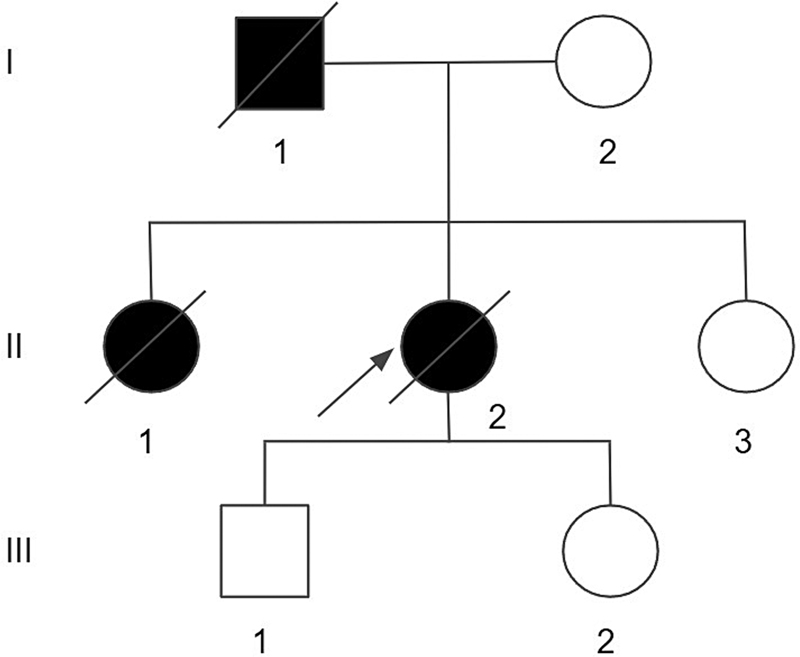
In addition to the index patient, we investigated the patient's sister (30 years old) and 2 children (13 and 15 years old), who are depicted in the heredrogram (
Fig. 1 Heredogram of the family investigated in the study case. The index case is represented by II-2. The filled figures represent the patients with a clinical diagnosis of Li-Fraumeni syndrome (LFS). The filled cases presented clinical criteria for the diagnosis of LFS. The dominant dispersion of the mutation is observed, although the offspring of the index case does not carry the same mutation.
The current study was submitted to and approved by the Teaching, Research, and Extension Committee of Hospital São Paulo at UNIFESP, under the official number 347/23. Informed consent was obtained from all subjects. Before the genetic sequencing of the index and kindreds, we investigated the perceptions and attitudes of these individuals regarding the potential impact on their quality of life through psychosocial impact analysis questionnaires in the context of a molecular LFS diagnosis. After this investigation, we conducted a follow-up psychosocial impact study using the questionnaires described here.
We collected 4 mL of peripheral blood from all patients with informed consent from the patients themselves or their legal guardians. Genomic DNA extraction was performed from peripheral blood leukocytes using the Gentra Puregene Blood Kit (QIAGEN) following the manufacturer's recommendations. The DNA purity and concentration were measured using the NanoVue Plus spectrophotometer (GE Healthcare).
We amplified DNA fragments corresponding to exons 5-8 of TP53 gene using polymerase chain reaction (PCR) assay. Primers were designed using the Primer3 (Whitehead Institute for Biomedical Research) program. For the PCR reaction, we used the PCR Master Mix Promega kit (Promega Corp.), following the manufacturer's recommendations. The sequencing reaction was performed using the Big Dye Terminator Cycle Sequencing Ready Reaction Kit (Applied Biosystems), as previously described (REFE). Sequencing was carried out on the ABI Prism 3130xl (Applied Biosystems) sequencer, and the results were analyzed using the CLC Main Workbench 6 (QIAGEN) bioinformatics tool and compared to sequences in GenBank (National Institutes of Health) using the Basic Local Alignment Search Tool (BLAST, National Institutes of Health) to identify possible mutations.
The TP53 genetic variants found were compared to those available in the Protein Analysis through Evolutionary Relationships (PANTHER) database, ENTPRISE-X, Ensembl Genome Browser (European Bioinformatics Institute), and the Single Nucleotide Polymorphism Database (dbSNP; National Institutes of Health). For mutation impact analysis, we used the following prediction tools: the ClinVar (National Institutes of Health) public archive and the Protein Variation Effect Analyzer (PROVEAN, National Institutes of Health) software.
To analyze the psychosocial impact on the study participants, we used psychological assessment instruments represented by three questionnaires. These are: i) Hospital Anxiety and Depression (HAD) scale;
Family members with a molecular diagnosis of LFS would be followed up at the Outpatient Clinic (EPM/UNIFESP), where secondary prevention measures for neoplastic screening and health promotion can be implemented. The clinical investigation protocol would follow the approach proposed by McBride et al.
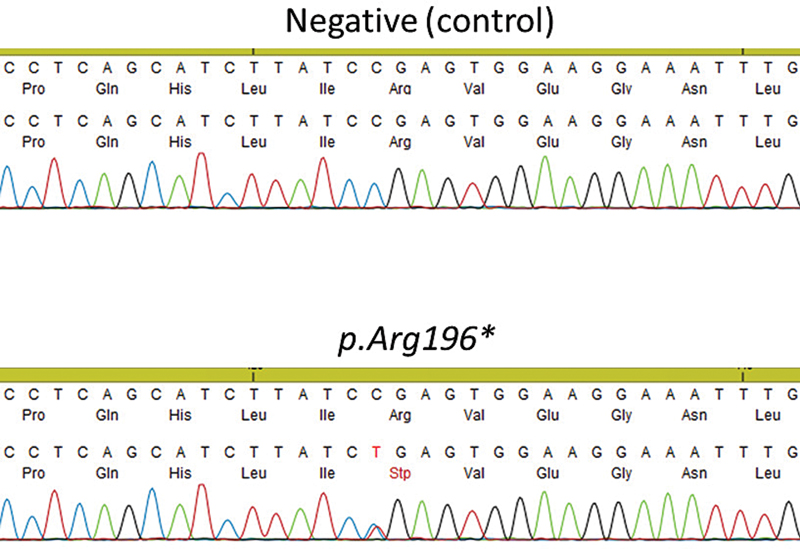
The molecular test of the index patient revealed a variant in exon 6 of the TP53 gene (c.586C > T). This variant leads to substituting Arginine with a premature stop codon (p. Arg196Ter), as shown in
| Prediction tool | In-silico analysis |
|---|---|
| PROVEAN | Deleterious |
| ClinVar | Pathogenic |
| PANTHER | Probably damaging (Pdel score = 0.74) |
| ENTPRISE-X | Pathogenecity score = 0.93795 |
Abbreviations: PANTHER, Protein Analysis through Evolutionary Relationships; Pdel, Probability of a Deleterious Effect; PROVEAN, Protein Variation Effect Analyzer.
Fig. 2 Index patient's electropherogram. Note that the pathogenic variant leads to a premature stop codon that turns the protein dysfunctional.
To our knowledge, this is the first description of a p.Arg196Ter variant among the Brazilian population. Molecular analysis showed that all three first-degree relatives (two children and one sister) had a wild-type genotype, thus excluding them as carriers of the pathogenic variant found in the index case.
The questionnaires abovementioned revealed a higher level of anxiety and psychosocial impact in the younger sister of the index case, outlining how the disease understanding may impact family members (
| Scale | Participant III-1 | Participant II-3 | Participant III-2 | |||
|---|---|---|---|---|---|---|
| Before molecular test | After molecular test | Before molecular test | After molecular test | Before molecular test | After molecular test | |
| Functional capacity | 100 | 100 | 100 | 100 | 100 | 100 |
| Limitation due to physical aspects | 75 | 100 | 100 | 100 | 75 | 100 |
| Pain | 74 | 84 | 100 | 100 | 62 | 100 |
| General health status | 47 | 17 | 62 | 62 | 57 | 47 |
| Vitality | 55 | 60 | 65 | 20 | 40 | 65 |
| Social aspects | 100 | 50 | 100 | 87,5 | 100 | 50 |
| Limitation due to emotional aspects | 100 | 0 | 0 | 33,3 | 66,6 | 0 |
| Mental health | 92 | 40 | 76 | 68 | 72 | 72 |
| Scale | Participant III-1 | Participant II-3 | Participant III-2 | |||
|---|---|---|---|---|---|---|
| Before molecular test | After molecular test | Before molecular test | After molecular test | Before molecular test | After molecular test | |
| Anxiety | 6 | 13 | 6 | 8 | 13 | 8 |
| Depression | 6 | 12 | 3 | 8 | 5 | 9 |
| Scale | Participant III-1 | Participant II-3 | Participant III-2 | |||
|---|---|---|---|---|---|---|
| Before molecular test | After molecular test | Before molecular test | After molecular test | Before molecular test | After molecular test | |
| Score | 13 | 16 | 32 | 37 | 8 | 8 |
To our knowledge, this is the first occurrence of the pathogenic variant p.Arg196Ter in Brazil. This finding contributes to the Brazilian scientific literature and underscores the importance of characterizing specific genetic variants in different populations, considering the potential clinical and therapeutic implications.
The present study encompassed both the molecular aspects and the psychosocial impacts of the syndrome, and its findings can be contextualized in light of the most recent literature. Traditionally, studies focused on SLF have primarily targeted clinical aspects, but have recently begun to address the psychosocial and emotional peculiarities.
The findings of this study reinforce those of Lammens et al., who demonstrated that the levels of psychosocial impact did not differ significantly according to the molecular test.
Still, regarding the participants' knowledge of the syndrome and its impacts on the family, exemplified by the finding in the patient-index's sister, we can establish a correlation with what was described by Werner-Lin et al.,
Semiqualitative analysis of the questionnaires revealed a higher level of anxiety and psychosocial impact of the index case in the younger sister, indicating the possibility of a correlation between age group and understanding of the syndrome and its effects on the family. The early losses of close relatives, mentioned as anxieties, also resemble the observations of Werner-Lin et al., highlighting the prevalence of anticipatory loss experiences in this population.
Regarding the molecular aspects, notably, the present study highlighted a novel aspect: this variant is described for the first time in Brazil. This finding not only contributes to Brazilian scientific literature but also emphasizes the importance of characterizing specific genetic variants in different populations, considering potential clinical and therapeutic implications.
The present study delved into the multifaceted realm of LFS, shedding light on both its molecular basis and its profound psychosocial impacts. By exploring the case of one LFS patient and her family through a mixed-method approach, we identified the first occurrence of the pathogenic variant p.Arg196Ter TP53 in the Brazilian population, while also revealing significant psychosocial distress, particularly in the younger sister of the index case.
This underscores the intricate interplay between genetic diagnosis and psychological well-being within LFS families, emphasizing the need for customized, multidisciplinary care. Furthermore, our identification of a previously unreported variant underscores the importance of population-specific genetic characterization for improved clinical management. Overall, our findings contribute not only to the scientific understanding of LFS but also emphasize the imperative of holistic, individualized approaches to care in addressing the complexities of this syndrome.
Li-Fraumeni syndrome (LFS) is an uncommon autosomal dominant hereditary predisposition to multiple cancers, primarily linked to TP53 gene mutations.1 This gene’s pathogenic variants in LFS carriers increase the risk of diverse cancers, and observational studies suggest that these patients may experience a profound impact on psychosocial parameters.2
Patients with LFS and their families face complex decisions about risk communication and prevention strategies, suggesting that clinical and molecular diagnosis may affect quality of life and anxiety.3 As a result, this cohort presents a multifaceted clinical and psychosocial dilemma that necessitates comprehensive, individualized care and a deeper understanding of its implications.3
Here, we investigated one patient with LFS and their family members with a mixed-method approach, including genomic research and psychosocial evaluation. We also describe a novel harmful variant of TP53 in the Brazilian population. The questionnaires implemented revealed that the younger sister of the index case exhibited higher anxiety with a consequent psychosocial impact on her comprehension of the syndrome’s implications for her family, with early losses and concerns about affected relatives contributing to distress, as a younger family member.
The general objective of the study was to conduct a cross-sectional analysis of the molecular, clinical, and psychosocial variables of patients and their family members diagnosed with Li-Fraumeni syndrome (LFS), as well as those who are noncarriers of TP53 mutations predisposing them to LFS. This study was conducted before and after molecular genetic testing of a family identified at the Alpha Center Outpatient Clinic of Escola Paulista de Medicina, Universidade Federal de São Paulo (EPM/UNIFESP), based on an index patient who received a clinical diagnosis of LFS in June 2020.
To investigate the impact on the quality of life of relatives up to third-degree of a patient with a clinical diagnosis of LFS by collecting and analyzing their perceptions and attitudes through questionnaires regarding quality of life in pre- and postgenetic counseling.
To perform TP53 gene sequencing in a patient with a clinical diagnosis of LFS (index case) and her family members.
To conduct an in-silico functional analysis of the TP53 gene mutation found in the studied family.
To monitor the clinical management of patients with LFS, evaluating the implementation of neoplasia screening measures and health promotion within their families.
As well as to critically analyze the psychosocial aspects involved in the clinical management of LFS, decision-making, and care measures, using principles of implementation science.
To develop a directive action flowchart to improve the identification, management, and multidisciplinary follow-up of families affected by TP53 mutations and/or LFS at the institutional level (Hospital São Paulo, EPM/UNIFESP).
The overarching aim of this study was to improve the identification, management, and follow-up practices for patients with LFS and their families, with the goal of developing more effective genetic counseling strategies aligned with public health objectives.
A family of an index case and three first-degree relatives has been followed at our Internal Medicine Outpatient Unit at UNIFESP. The index case is that of a female patient diagnosed with soft-tissue sarcoma at the age of 16 years and invasive ductal carcinoma at 34 years, when she deceased. The patient’s father was diagnosed with colon adenocarcinoma at 43 years of age, when he deceased, and her older sister was diagnosed with leukemia at 23 years, when she deceased. The clinical suspicion of LFS was based on the pattern of tumors observed in the index case and her family members.
In addition to the index patient, we investigated the patient’s sister (30 years old) and 2 children (13 and 15 years old), who are depicted in the heredrogram (Figure 1) as II-3, III-1, and III-2 respectively.
Fig. 1 Heredogram of the family investigated in the study case. The index case is represented by II-2. The filled figures represent the patients with a clinical diagnosis of Li-Fraumeni syndrome (LFS). The filled cases presented clinical criteria for the diagnosis of LFS. The dominant dispersion of the mutation is observed, although the offspring of the index case does not carry the same mutation.
The current study was submitted to and approved by the Teaching, Research, and Extension Committee of Hospital São Paulo at UNIFESP, under the official number 347/23. Informed consent was obtained from all subjects. Before the genetic sequencing of the index and kindreds, we investigated the perceptions and attitudes of these individuals regarding the potential impact on their quality of life through psychosocial impact analysis questionnaires in the context of a molecular LFS diagnosis. After this investigation, we conducted a follow-up psychosocial impact study using the questionnaires described here.
We collected 4 mL of peripheral blood from all patients with informed consent from the patients themselves or their legal guardians. Genomic DNA extraction was performed from peripheral blood leukocytes using the Gentra Puregene Blood Kit (QIAGEN) following the manufacturer’s recommendations. The DNA purity and concentration were measured using the NanoVue Plus spectrophotometer (GE Healthcare).
We amplified DNA fragments corresponding to exons 5-8 of TP53 gene using polymerase chain reaction (PCR) assay. Primers were designed using the Primer3 (Whitehead Institute for Biomedical Research) program. For the PCR reaction, we used the PCR Master Mix Promega kit (Promega Corp.), following the manufacturer’s recommendations. The sequencing reaction was performed using the Big Dye Terminator Cycle Sequencing Ready Reaction Kit (Applied Biosystems), as previously described (REFE). Sequencing was carried out on the ABI Prism 3130xl (Applied Biosystems) sequencer, and the results were analyzed using the CLC Main Workbench 6 (QIAGEN) bioinformatics tool and compared to sequences in GenBank (National Institutes of Health) using the Basic Local Alignment Search Tool (BLAST, National Institutes of Health) to identify possible mutations.
The TP53 genetic variants found were compared to those available in the Protein Analysis through Evolutionary Relationships (PANTHER) database, ENTPRISE-X, Ensembl Genome Browser (European Bioinformatics Institute), and the Single Nucleotide Polymorphism Database (dbSNP; National Institutes of Health). For mutation impact analysis, we used the following prediction tools: the ClinVar (National Institutes of Health) public archive and the Protein Variation Effect Analyzer (PROVEAN, National Institutes of Health) software.
To analyze the psychosocial impact on the study participants, we used psychological assessment instruments represented by three questionnaires. These are: i) Hospital Anxiety and Depression (HAD) scale;4 ii) Impact of Event Scale (IES);5 and iii) the Medical Outcomes Study 36-item Short-Form Health Survey (SF-36).6 The results of these questionnaires comprise quantitative analysis of qualitative categories regarding perceptions and attitudes of these individuals, which have enabled us to better understand the potential impact(s) of LFS on the surveyed family members’ overall quality of life.
Family members with a molecular diagnosis of LFS would be followed up at the Outpatient Clinic (EPM/UNIFESP), where secondary prevention measures for neoplastic screening and health promotion can be implemented. The clinical investigation protocol would follow the approach proposed by McBride et al.2
The molecular test of the index patient revealed a variant in exon 6 of the TP53 gene (c.586C > T). This variant leads to substituting Arginine with a premature stop codon (p. Arg196Ter), as shown in Figure 2. The in-silico analysis revealed deleterious characteristics by the PROVEAN prediction method (score: 14.002) and pathogenicity according to ClinVar (Table 1). The PANTHER comparisons indicated that the mutation had a “possibly damaging” (Probability of a Deleterious Effect [Pdel] score of 0.74), while ENTPRISE-X showed a pathogenicity score of 0.93795 (with a value ≥ 0.5 considered deleterious). The Ensembl and dbSNP revealed that the mutation is associated with Hereditary Cancer Predisposition Syndromes, primarily Li-Fraumeni.
| Prediction tool | In-silico analysis |
|---|---|
| PROVEAN | Deleterious |
| ClinVar | Pathogenic |
| PANTHER | Probably damaging (Pdel score = 0.74) |
| ENTPRISE-X | Pathogenecity score = 0.93795 |
Abbreviations: PANTHER, Protein Analysis through Evolutionary Relationships; Pdel, Probability of a Deleterious Effect; PROVEAN, Protein Variation Effect Analyzer.
Fig. 2 Index patient’s electropherogram. Note that the pathogenic variant leads to a premature stop codon that turns the protein dysfunctional.
To our knowledge, this is the first description of a p.Arg196Ter variant among the Brazilian population. Molecular analysis showed that all three first-degree relatives (two children and one sister) had a wild-type genotype, thus excluding them as carriers of the pathogenic variant found in the index case.
The questionnaires abovementioned revealed a higher level of anxiety and psychosocial impact in the younger sister of the index case, outlining how the disease understanding may impact family members (Tables 2 3 4). As observed in the case of the index patient’s sister, early losses of close family members and concerns about potentially affected relatives were mentioned as sources of distress during the psychosocial investigation. Furthermore, the limited knowledge of the index patient’s children regarding the disease may outline how young age and abstract developmental level might impact the familial genetic diagnosis from a psychosocial standpoint, as indicated by the SF-36, HAD, and IES questionnaires.
| Scale | Participant III-1 | Participant II-3 | Participant III-2 | |||
|---|---|---|---|---|---|---|
| Before molecular test | After molecular test | Before molecular test | After molecular test | Before molecular test | After molecular test | |
| Functional capacity | 100 | 100 | 100 | 100 | 100 | 100 |
| Limitation due to physical aspects | 75 | 100 | 100 | 100 | 75 | 100 |
| Pain | 74 | 84 | 100 | 100 | 62 | 100 |
| General health status | 47 | 17 | 62 | 62 | 57 | 47 |
| Vitality | 55 | 60 | 65 | 20 | 40 | 65 |
| Social aspects | 100 | 50 | 100 | 87,5 | 100 | 50 |
| Limitation due to emotional aspects | 100 | 0 | 0 | 33,3 | 66,6 | 0 |
| Mental health | 92 | 40 | 76 | 68 | 72 | 72 |
| Scale | Participant III-1 | Participant II-3 | Participant III-2 | |||
|---|---|---|---|---|---|---|
| Before molecular test | After molecular test | Before molecular test | After molecular test | Before molecular test | After molecular test | |
| Anxiety | 6 | 13 | 6 | 8 | 13 | 8 |
| Depression | 6 | 12 | 3 | 8 | 5 | 9 |
| Scale | Participant III-1 | Participant II-3 | Participant III-2 | |||
|---|---|---|---|---|---|---|
| Before molecular test | After molecular test | Before molecular test | After molecular test | Before molecular test | After molecular test | |
| Score | 13 | 16 | 32 | 37 | 8 | 8 |
To our knowledge, this is the first occurrence of the pathogenic variant p.Arg196Ter in Brazil. This finding contributes to the Brazilian scientific literature and underscores the importance of characterizing specific genetic variants in different populations, considering the potential clinical and therapeutic implications.
The present study encompassed both the molecular aspects and the psychosocial impacts of the syndrome, and its findings can be contextualized in light of the most recent literature. Traditionally, studies focused on SLF have primarily targeted clinical aspects, but have recently begun to address the psychosocial and emotional peculiarities.7 There are psychological particularities and dynamic experiences that are unique to SLF, requiring multidisciplinary and personalized care.7 Additionally, it is observed that genetic testing represents a significant psychosocial impact on SLF patients, especially in children and adolescents.7
The findings of this study reinforce those of Lammens et al., who demonstrated that the levels of psychosocial impact did not differ significantly according to the molecular test.8 This observation is consistent with the analysis conducted on one of the participants in this study, who also did not show significant changes in psychosocial impact, even after a negative molecular test. This is because, according to the participant herself, she still harbors anxieties related to recent losses and concerns about the likelihood of other family members being carriers of the syndrome. This suggests that knowledge of the pathogenic variant’s presence or absence does not necessarily broaden the psychosocial impact, pointing to the complex interaction between genetic and psychosocial factors in the experience of individuals and families affected by SLF.
Still, regarding the participants’ knowledge of the syndrome and its impacts on the family, exemplified by the finding in the patient-index’s sister, we can establish a correlation with what was described by Werner-Lin et al.,9 who explored the experiences of individuals and families with SLF. The narratives reported by these participants, including anticipation, fear, fatalism, and grief, related to the limited predictability of the cancer event, resonate with the anxieties and concerns expressed by the participants in this study.
Semiqualitative analysis of the questionnaires revealed a higher level of anxiety and psychosocial impact of the index case in the younger sister, indicating the possibility of a correlation between age group and understanding of the syndrome and its effects on the family. The early losses of close relatives, mentioned as anxieties, also resemble the observations of Werner-Lin et al., highlighting the prevalence of anticipatory loss experiences in this population.9
Regarding the molecular aspects, notably, the present study highlighted a novel aspect: this variant is described for the first time in Brazil. This finding not only contributes to Brazilian scientific literature but also emphasizes the importance of characterizing specific genetic variants in different populations, considering potential clinical and therapeutic implications.
The present study delved into the multifaceted realm of LFS, shedding light on both its molecular basis and its profound psychosocial impacts. By exploring the case of one LFS patient and her family through a mixed-method approach, we identified the first occurrence of the pathogenic variant p.Arg196Ter TP53 in the Brazilian population, while also revealing significant psychosocial distress, particularly in the younger sister of the index case.
This underscores the intricate interplay between genetic diagnosis and psychological well-being within LFS families, emphasizing the need for customized, multidisciplinary care. Furthermore, our identification of a previously unreported variant underscores the importance of population-specific genetic characterization for improved clinical management. Overall, our findings contribute not only to the scientific understanding of LFS but also emphasize the imperative of holistic, individualized approaches to care in addressing the complexities of this syndrome.
Journal: Brazilian Journal of Oncology
DOI: 10.1055/s-00059887
e-issn: 2526-8732
Publisher: Thieme Revinter Publicações Ltda.
Publisher address: Rua do Matoso 170, Rio de Janeiro, RJ, CEP 20270-135, Brazil
Falha na comunicação com o serviço de processamento. Tente novamente.
1. Valdez, J M and Nichols, K E and Kesserwan, C. Li-Fraumeni syndrome: a paradigm for the understanding of hereditary cancer predisposition. Br J Haematol [online]. 2017, vol. 176, p. 539-552. https://doi.org/10.1111/bjh.14461 Ver referência
2. McBride, K A and Ballinger, M L and Killick, E. Li-Fraumeni syndrome: cancer risk assessment and clinical management. Nat Rev Clin Oncol [online]. 2014, vol. 11, p. 260-271. https://doi.org/10.1038/nrclinonc.2014.41 Ver referência
3. Peterson, S K and Pentz, R D and Marani, S K. Psychological functioning in persons considering genetic counseling and testing for Li-Fraumeni syndrome. Psychooncology [online]. 2008, vol. 17, p. 783-789. https://doi.org/10.1002/pon.1352 Ver referência
4. Zigmond, A S and Snaith, R P. The hospital anxiety and depression scale. Acta Psychiatr Scand [online]. 1983, vol. 67, p. 361-370. https://doi.org/10.1111/j.1600-0447.1983.tb09716.x Ver referência
5. Horowitz, M and Wilner, N and Alvarez, W. Impact of Event Scale: a measure of subjective stress. Psychosom Med [online]. 1979, vol. 41, p. 209-218. https://doi.org/10.1097/00006842-197905000-00004 Ver referência
6. Brazier, J E and Harper, R and Jones, N M. Validating the SF-36 health survey questionnaire: new outcome measure for primary care. BMJ [online]. 1992, vol. 305, p. 160-164. https://doi.org/10.1136/bmj.305.6846.160 Ver referência
7. Barnett, M and Breen, K E and Kennedy, J A and Hernandez, M and Matsoukas, K and MacGregor, M. Psychosocial interventions and needs among individuals and families with Li-Fraumeni syndrome: A scoping review. Clin Genet [online]. 2022, vol. 101, p. 161-182. https://doi.org/10.1111/cge.14042 Ver referência
8. Lammens, C RM and Aaronson, N K and Wagner, A. Genetic testing in Li-Fraumeni syndrome: uptake and psychosocial consequences. J Clin Oncol [online]. 2010, vol. 28, p. 3008-3014. https://doi.org/10.1200/JCO.2009.27.2112 Ver referência
9. Werner-Lin, A and Young, J L and Wilsnack, C. Waiting and “weighted down”: the challenge of anticipatory loss for individuals and families with Li-Fraumeni Syndrome. Fam Cancer [online]. 2020, vol. 19, p. 259-268. https://doi.org/10.1007/s10689-020-00173-6 Ver referência
Dados de acesso insuficientes para visualização no mapa.